
When you plan or accept a commissioning, you have to keep technical test steps, legal duties and contractual evidence apart, without letting roles or the order of inspections slip. Without a clear structure, trial operation, safety testing and acceptance blur into one another, and responsibilities stay unclear. This article sorts the individual inspection steps, legal foundations and documentation requirements so that you can assess the status of your plant at any time.
Key points at a glance
Digital commissioning replaces paper inspection records with mobile checklists, built-in inspection logic and digital evidence.
Seven consecutive steps lead from preparation through safety and function testing to the performance guarantee run.
Manufacturers secure conformity through CE marking and the declaration of conformity, while operators are additionally responsible for safe use under the German Industrial Safety Regulation.
FAT and SAT test the plant in different places and at different times, and they do not replace each other.
Structured inspection data creates traceability through timestamps, inspectors, measured values and approvals for every inspection step.
What is digital commissioning?
Digital commissioning is the software-supported execution and documentation of all inspections, approvals and performance records that bring a machine or plant into safe and contractually compliant operation. Mobile checklists, built-in inspection logic and digital evidence replace paper inspection records.
Commissioning follows mechanical completion and assembly. It is the middle of the three project phases: construction, commissioning and operation. Its purpose is to prove operational readiness, detect technical faults before continuous operation and avoid downtime later on.
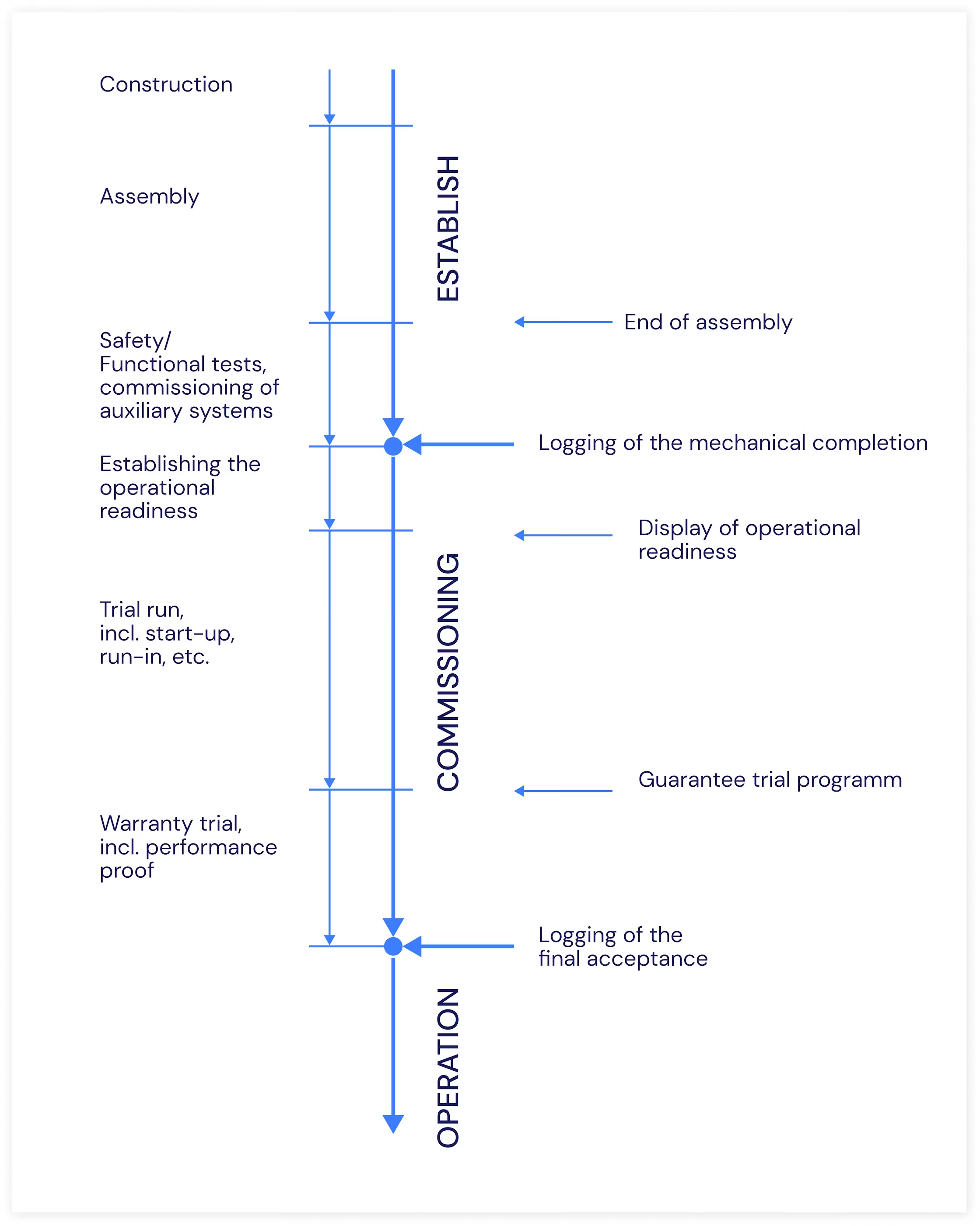
Initial commissioning describes the moment a machine or plant moves from standstill into intended continuous operation for the first time. After modifications, relocations or a substantial change, additional inspection and assessment requirements apply. Whether a new conformity assessment is needed depends on the scope of the change and the hazards it creates.
Whether a commissioning runs digitally or on paper does not change the scope of inspection. It changes how reliably you can prove afterwards what was checked, by whom, with which result and on the basis of which document version.
What is the difference between FAT and SAT?
The FAT tests a machine at the manufacturer's plant before delivery, the SAT tests it after installation and connection at the customer site. Manufacturer and operator have to define the exact scope, acceptance criteria and consequences of deviations in the contract.
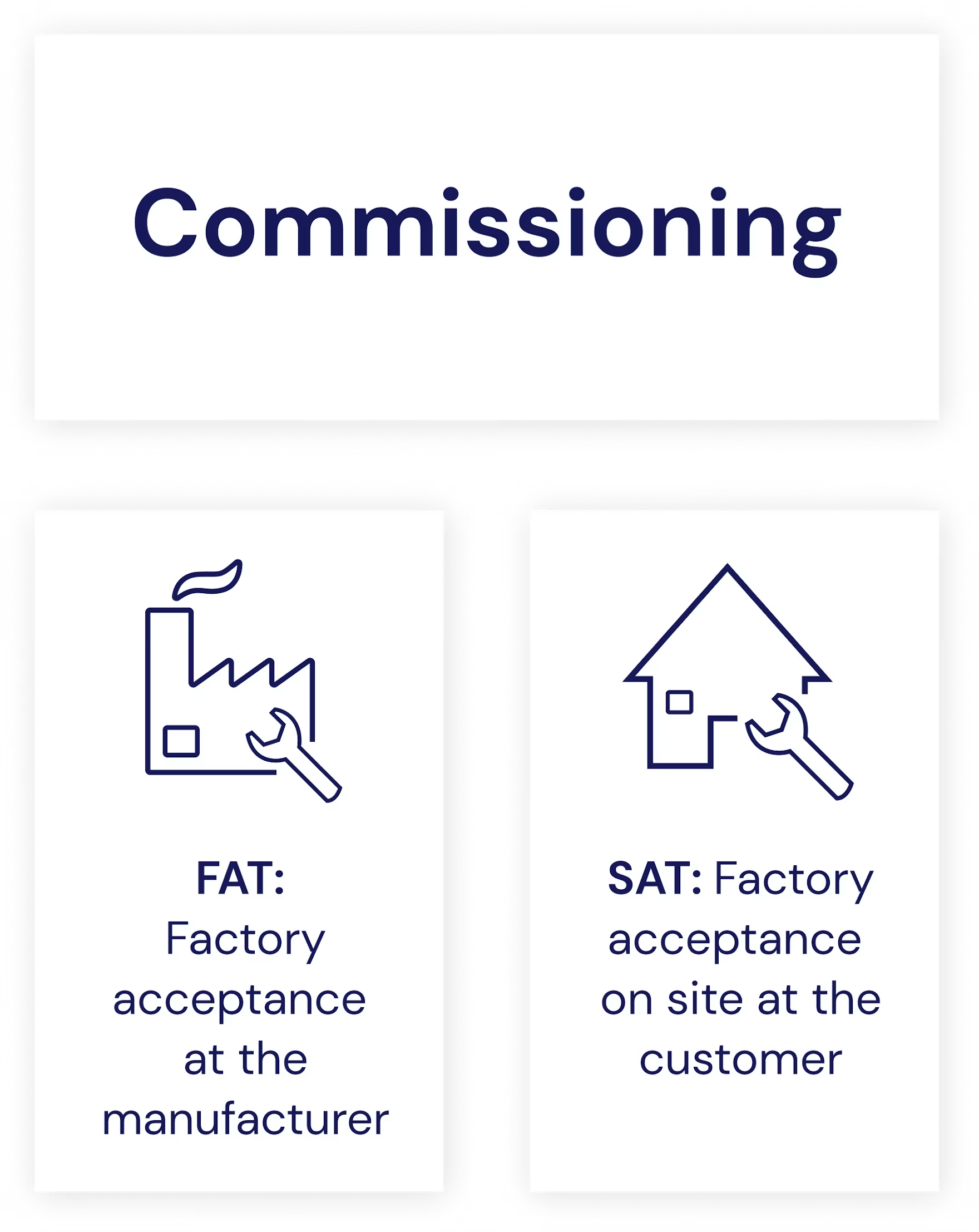
During the factory acceptance test, quality management, engineering, automation as well as operating and maintenance staff check whether the machine meets the order specification and design requirements. Depending on the plant, the FAT covers functional sequences, safety functions, software versions, interfaces, cycle times and a review of the documentation.
Once the FAT is passed, or released subject to conditions, the machine is dismantled, shipped and installed at the customer site. The site acceptance test then covers the completeness of the machine and its documentation, correct installation, safety tests, utility connections, interfaces and the trial run under the conditions on site.
FAT and SAT are not interchangeable. The FAT catches design and functional faults before costly shipping. The SAT proves that the machine works properly after transport, assembly and integration into the real manufacturing environment. For large plants, partial acceptances per subsystem make sense before the overall plant goes into operation.
How does the commissioning process work step by step?
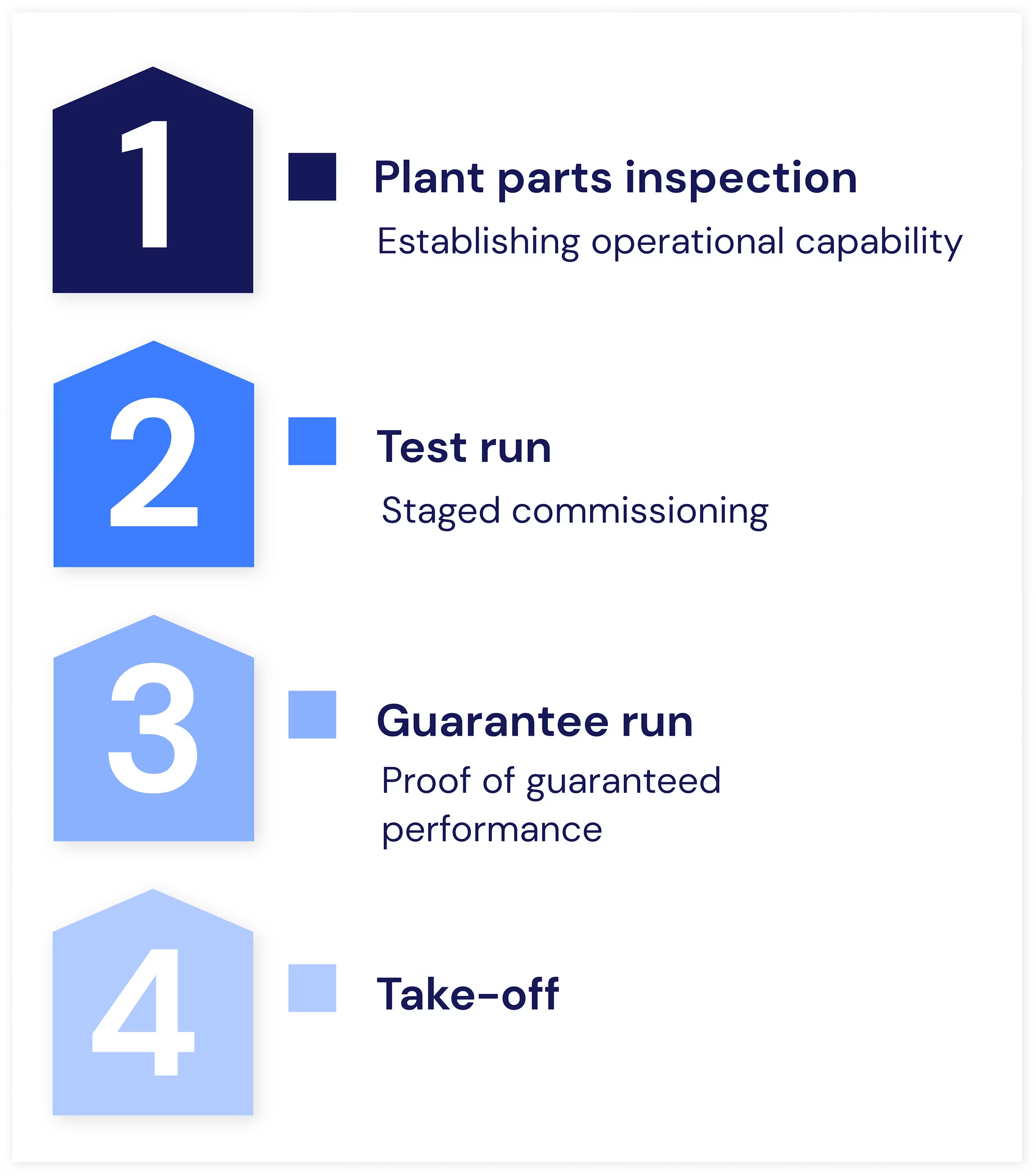
A robust commissioning process runs in seven consecutive steps, from the assembly check to the contractual performance record. Every step needs defined entry conditions, inspection criteria, responsible roles and a documented approval.
Commissioning preparation: Check planning documents, assembly status, outstanding work and prerequisites.
Cleaning: Clean the plant inside and out and remove hazardous residues.
Safety, function and acceptance testing: Check protective functions, plant functions and agreed performance characteristics.
Overall leak test: Examine connections and pressurised systems for leaks.
Inerting: Displace oxygen or reactive media with a suitable inert gas, where the process requires it.
Start-up: Stabilise, load and optimise the plant in stages, then start and shut down repeatedly.
Performance guarantee run: Prove the contractually guaranteed output under the agreed conditions.
Recommendation: Link every step to a formal approval point. The next process step may only start once mandatory inspections are complete, critical deviations are closed and the responsible roles are named.
The following sections walk through the seven steps in the order you will work through them in the project.
Steps 1 and 2: preparation and cleaning
Preparation confirms that the plant is mechanically complete and ready for the inspections that follow. Cleaning removes foreign objects and residues that would endanger people, damage components or distort measurement results.
During preparation, the team compares the physical installation with drawings, P&IDs, circuit diagrams, bills of materials and layout plans. It records assembly deviations, missing parts, open cables, wrong directions of rotation, incomplete labelling and outstanding work. Changes have to be traceable in the as-built documentation.
A sound inspection looks beyond the machine itself. Foundations, utility supply, network connections, extraction, lighting, access routes and escape routes are part of the prerequisites too. Measuring equipment has to be suitable for the intended use and, where required, calibrated.
Interior and exterior cleaning is carried out to suit the plant: wiping, brushing, blasting, grinding or controlled blowing out with air, steam or nitrogen. The method depends on the material, the type of contamination and the risk assessment. With nitrogen, you have to explicitly account for oxygen displacement and the risk of asphyxiation.
The most common mistake at this point is moving into trial operation too early. Unfinished assembly work increases the risk of accidents and later complicates root cause analysis, because assembly faults, setting faults and control faults occur at the same time.
Step 3: safety, function and acceptance testing
The safety test confirms that protective measures work, the function test checks the intended sequence, and the acceptance test evaluates the agreed contractual characteristics. These inspections pursue different goals and therefore need separate criteria and approvals.
Safety testing
Safety testing covers protective devices, interlocks, emergency stop and emergency shutdown functions, safety controls, depressurisation and drainage systems as well as safe operating modes. Inspectors do not only check whether a signal is triggered. They also check whether the plant reaches the defined safe state and whether unexpected restart is prevented.
The basis is the risk assessment according to EN ISO 12100. For safety-related parts of control systems, EN ISO 13849-1 or IEC 62061 apply depending on the design. The electrical equipment of machines is often assessed against EN 60204-1. Which standards apply follows from the machine, the hazards and the applicable conformity procedure.
Function testing
Function testing examines sequences, sensors, actuators, operating modes, recipes, alarms and interfaces. A structured test covers normal operation, edge cases and fault responses. Turn the failure modes from your FMEA or risk assessment into concrete test cases, otherwise you only test the good case.
Acceptance testing
Acceptance testing evaluates contractually guaranteed characteristics such as throughput, efficiency, availability, accuracy or product quality. The decisive factor is a measurement method agreed in advance. Without defined starting conditions, measuring points and tolerances, disputes arise even though both sides are assessing the same plant.
Steps 4 and 5: leak testing and inerting
The leak test looks for leaks at connections and pressurised components, and inerting then creates a safe or process-appropriate atmosphere. Test medium, test pressure and procedure have to follow from the technical design and the approved test instruction.
For the overall leak test, the team closes the designated vents and drains and pressurises the test area with an approved medium. Pressure gauges, pressure curve, holding time and leak detection methods provide the documented evidence. Blanket pressure values are unsuitable, because permissible pressure, material, volume and hazard are specific to each plant.
Oxygen must not be used as a test medium without careful assessment. Combined with oils, greases or flammable substances it creates a considerable fire and explosion hazard. The approved test procedure determines the medium and the required protective measures.
During inerting, nitrogen usually displaces the oxygen present or other reactive gases. Depending on the process, this protects against oxidation, corrosion or an explosive atmosphere. Effectiveness is confirmed by suitable measurements, for example the oxygen concentration at defined points.
Nitrogen is not toxic, but it displaces breathable air. Ventilation, area barriers, permit procedures and, where needed, gas detection are therefore a mandatory part of work preparation.
Steps 6 and 7: start-up and performance guarantee run
During start-up, the plant is brought under control from standstill to stable operation at rated conditions. The performance guarantee run that follows provides traceable proof of whether it reaches the contractually guaranteed output.
Start-up begins with individual units and auxiliary systems. Stabilisation, gradual loading, running in, controlled shutdown and restart follow. Only once the plant runs stably at the intended load levels does operation at full capacity follow.
Deviations are recorded in a punch list. Every entry needs a unique plant reference, a fault description, a criticality rating, a responsible person, a deadline and evidence of resolution. Photos and videos support root cause analysis, but they do not replace measured values or a formal function test.
For the performance guarantee run, input materials, ambient conditions, product variant, measurement method and permissible interruptions have to be fixed in advance. Otherwise there is no reliable way to judge whether a deviation comes from the machine, the material or the site conditions.
A staged approach works well in practice: technical stability first, then quality capability, and only then the contractual performance run. If you schedule the guarantee run too early, you usually produce additional repeats rather than a faster completion.
When is a commissioning successfully completed?
A commissioning is complete when the plant runs safely and as intended, meets the agreed quality and performance targets, and all required records are approved. A successful start-up alone is not enough.
Completion criteria include:
effective protective measures and completed safety-related inspections
fulfilled legal, normative and operational requirements
proven function under the agreed operating conditions
products in the required quality and quantity
completed FAT, SAT or performance records in line with the contract
approved operating, maintenance and safety documentation
trained operating and maintenance staff
closed critical defects and remaining items accepted in writing
documented handover to manufacturing and maintenance
The German Major Accidents Ordinance only applies if the establishment falls within its scope because of the hazardous substances present. In that case, the associated safety and organisational requirements have to be met before operation starts.
Technical completion, contractual acceptance and transfer of risk are not automatically the same moment. What counts are the contractual arrangements and the documented approvals. Digital status tracking makes these differences visible for project management, operators and suppliers.
Why does commissioning large plants often take months?
Large plants need long commissioning times because numerous subsystems, safety records and technical dependencies have to be tested in a fixed order. Digital processes mainly shorten waiting, searching and coordination times, not the test and stabilisation phases that are physically necessary.
Typical time drivers include:
incomplete assembly or delayed utility supply
complex scheduling and resource planning
safety considerations for different operating states
missing or unapproved documentation
dependencies between mechanics, electrics, automation and process engineering
repeated tests after software or design changes
long response times for defects and spare parts
unclear acceptance criteria between manufacturer and customer
Sound planning breaks the overall plant down into testable systems and subsystems. For each system, the project team defines prerequisites, test packages, responsible roles and approval points. This systemisation prevents a single open assembly from masking the progress of the entire plant.
Digital checklists provide only the order-specific inspections on site. Mandatory fields and threshold values prevent incomplete data sets. Deviations are assigned to a role immediately, while project management and specialist departments follow the status in parallel.
An ERP connection reduces extra work when order data, material numbers, serial numbers and machine variants flow into the inspection order automatically. Once complete, results and status information can be passed back to SAP or another leading system.
In practice, a combination of technical scheduling and digital deviation management works well. Software compensates for neither missing resources nor unstable machines. The biggest time gain comes where your teams have so far been waiting for information, decisions or complete records.
Which legal requirements apply to commissioning?
Manufacturers have to meet the requirements of European machinery law, and operators additionally have to ensure safe use under the German Industrial Safety Regulation (BetrSichV). CE marking, declaration of conformity and risk assessment each serve a different purpose.
Until 19 January 2027, Machinery Directive 2006/42/EC is the central European legal framework for machinery. From 20 January 2027, EU Machinery Regulation 2023/1230 replaces the directive. If your projects run beyond that cut-off date, decide early which set of rules applies at the time of placing on the market or putting into service.
Manufacturer duties: conformity assessment and CE marking
Before placing on the market or putting into service, the manufacturer has to carry out the prescribed conformity assessment procedure. This includes the risk assessment, technical documentation, operating instructions and the EC declaration of conformity. Under the new Machinery Regulation, the EU declaration of conformity takes its place.
CE marking signals that the manufacturer has taken the relevant European requirements into account and carried out the prescribed conformity assessment procedure. It is neither an independent quality seal nor an official approval. Partly completed machinery is subject to specific requirements, including a declaration of incorporation and assembly instructions. It may only be operated as intended once it forms part of a conforming complete machine.
Operator duties: BetrSichV and TRBS
For employers, the German Industrial Safety Regulation sets out the safe use of work equipment:
Section 4 BetrSichV: The employer may only allow work equipment to be used after carrying out the risk assessment, implementing the necessary protective measures and establishing that use is safe.
Section 6 BetrSichV: Work equipment and work processes have to be designed and used safely under the intended conditions of use.
Section 14 BetrSichV: Certain work equipment has to be inspected by a qualified person before first use or after changes subject to inspection.
Important Technical Rules for Industrial Safety are TRBS 1111 on risk assessment, TRBS 2111 on mechanical hazards and TRBS 2141 on hazards from steam and pressure. They put the BetrSichV into concrete terms and help the employer apply the state of the art.
Beyond machinery law, further regulations apply depending on the plant, for example for pressure equipment, explosion protection, electrical equipment, hazardous substances or installations requiring monitoring. ISO 45001 for occupational health and safety management and ISO 9001 for documented quality processes provide an organisational framework too, but they do not replace any legally required individual inspection.
Why does paper-based commissioning documentation reach its limits?
Paper-based documentation splits inspection, data capture, defect handling and archiving into several separate work steps. As the scope of the plant grows, search effort, transcription errors and coordination effort rise disproportionately.
Many companies create multilingual maximum checklists in Word or Excel. Staff print them, file them in order folders and complete them by hand on site. Several hundred pages are then scanned, named and assigned to an order in SAP or a document management system. This will probably sound familiar.
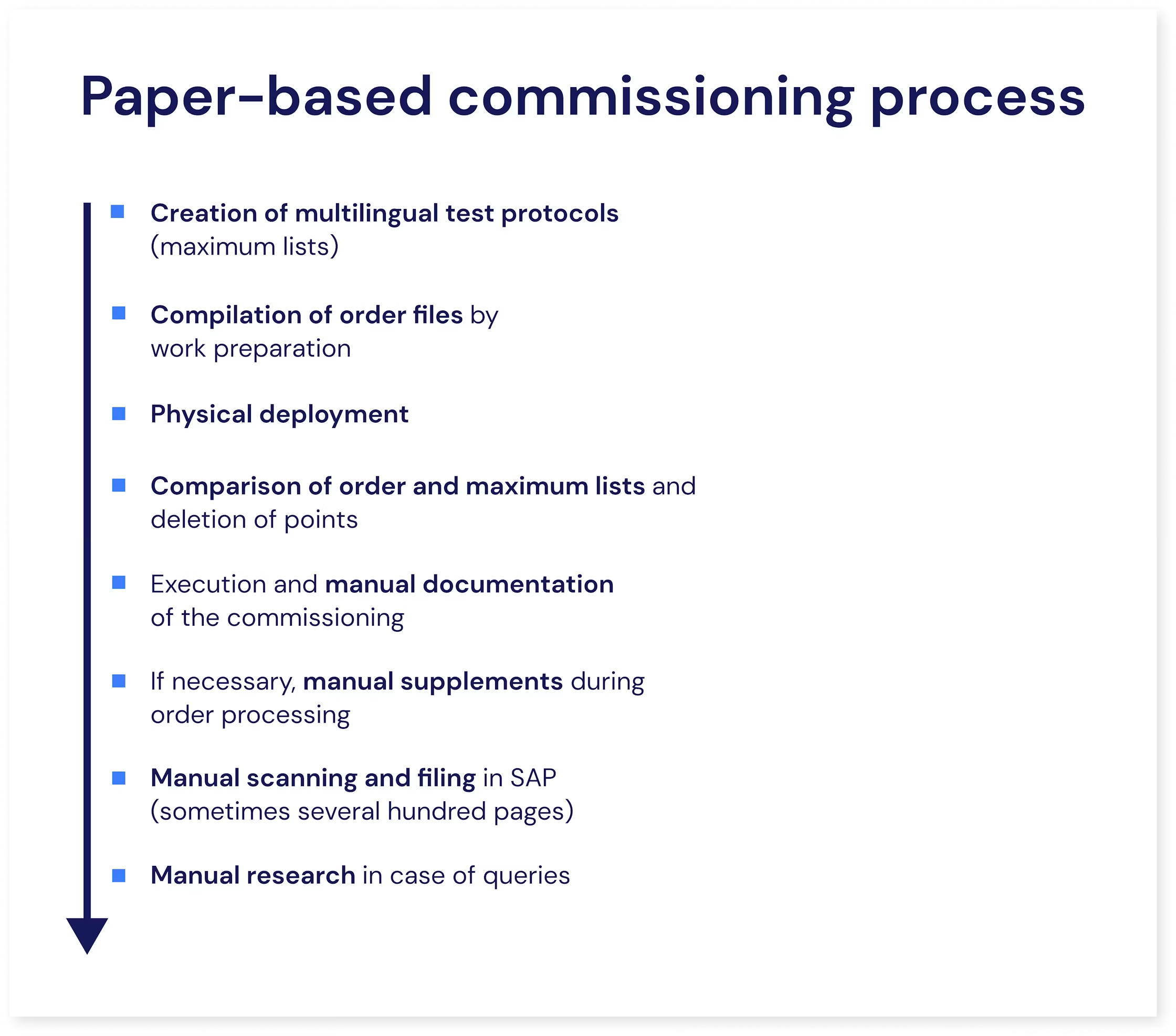
The process creates media breaks. Measured values are hard to read, mandatory fields stay empty, and photos sit apart from the inspection point on mobile phones or network drives. Later changes to forms also create parallel versions whose validity can only be verified with considerable effort.
Maximum checklists make the problem worse. They contain every variant and language, even though a specific order only needs part of them. Inspectors have to skip irrelevant items and cannot always tell which inspections are actually mandatory for the configured machine.
Sequence of the paper-based commissioning process, from creating multilingual inspection records through handwritten documentation and manual scanning into SAP to manual research when questions come up The paper-based sequence lines up eight manual work steps before a record can be found again.
Paper remains usable for simple, infrequent inspections or as a defined emergency process. For machines with many variants, international projects and extensive SAT records, however, it is not enough as the leading system.
Typical consequences in day-to-day work
Paper-based inspection processes extend lead time and make traceability harder in the event of quality defects. Incomplete records, delayed queries and dependence on the personal knowledge of experienced staff are particularly critical.
Typical consequences include:
High time expenditure: Inspectors transcribe values, sort pages and search for documents manually.
Error-prone data capture: Illegible entries, transposed digits and missing mandatory fields often only surface after the assignment.
Delayed defect handling: Information only reaches engineering or assembly once staff return and digitise the documents.
Low transparency: Project management and the customer cannot see the current inspection status without asking the team on site.
Weak traceability: In the event of complaints, staff have to piece together paper folders, scans, emails and separate image files.
Dependence on key people: Experienced commissioning engineers know the inspection sequence, limit values and typical faults, without that knowledge being fully documented.
Limited analysis: Handwritten findings cannot be analysed by fault type, assembly group, supplier or site without being captured again.
The saved paperwork is not the decisive factor. Missing or delayed information extends the entire troubleshooting cycle. A technical problem stays open longer when engineering, quality and assembly only receive a reliable finding days later.
What are the benefits of digital over paper-based commissioning?
Digital commissioning improves process guidance, data quality and traceability when it steers inspections in a binding way and processes results without media breaks. Paper is still sufficient for very simple individual inspections, but it quickly reaches its organisational limits in complex machine projects.
Recommendation: For recurring commissioning work, high variant counts or inspections subject to proof requirements, use a digital system as the leading documentation source. Keep a controlled paper process only as a fallback for technical outages.
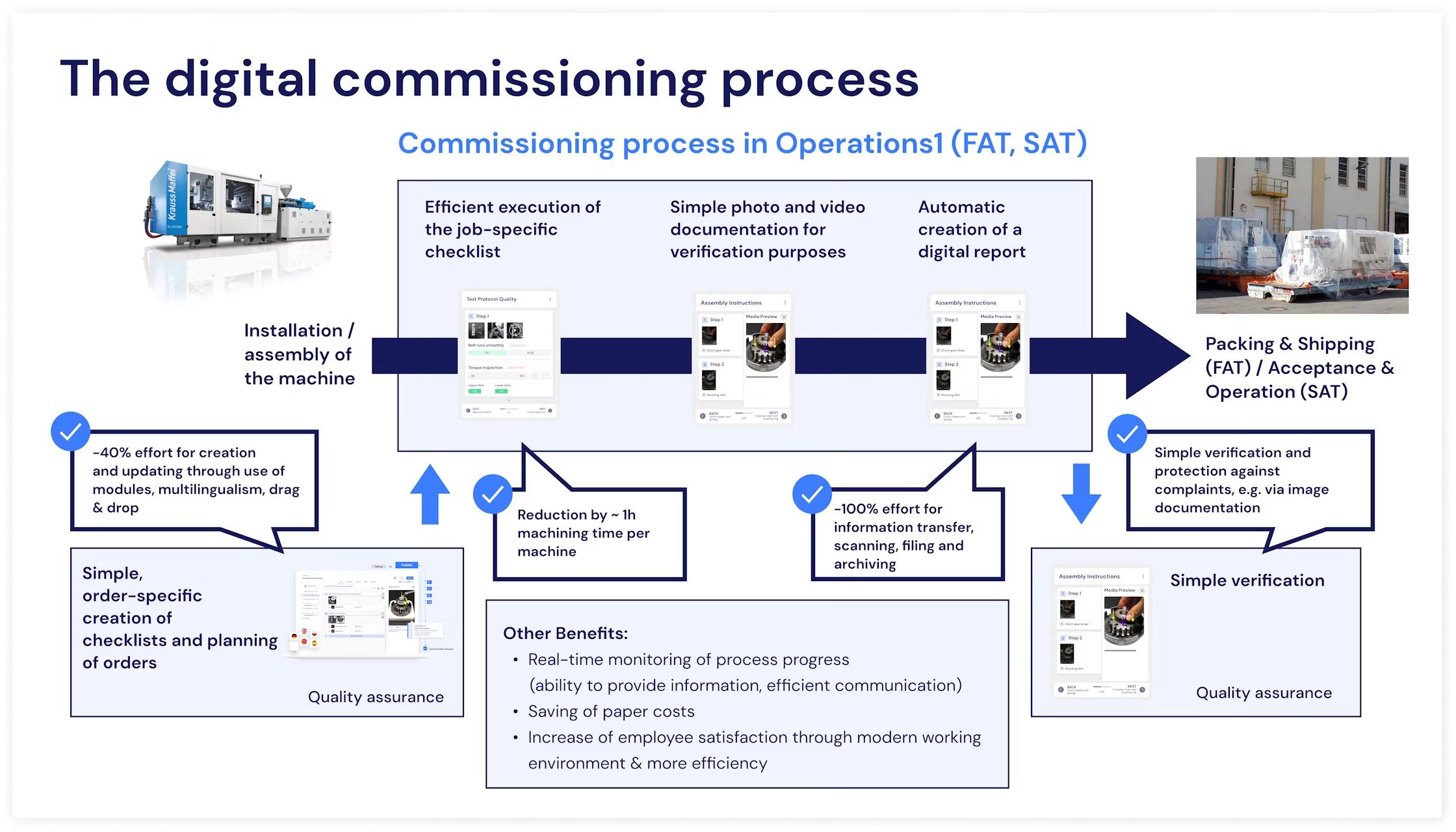
Digital commissioning process from installation through the order-specific checklist, photo and video documentation and automatic report generation to shipping for FAT or acceptance and operation for SAT In the digital sequence, checklist, media evidence and report are connected instead of being created in separate work steps.
Mobile checklists without media breaks
Mobile checklists capture inspection results directly at the machine and assign measured values, images and videos to the right inspection step. This removes handwritten intermediate steps and later transcription.
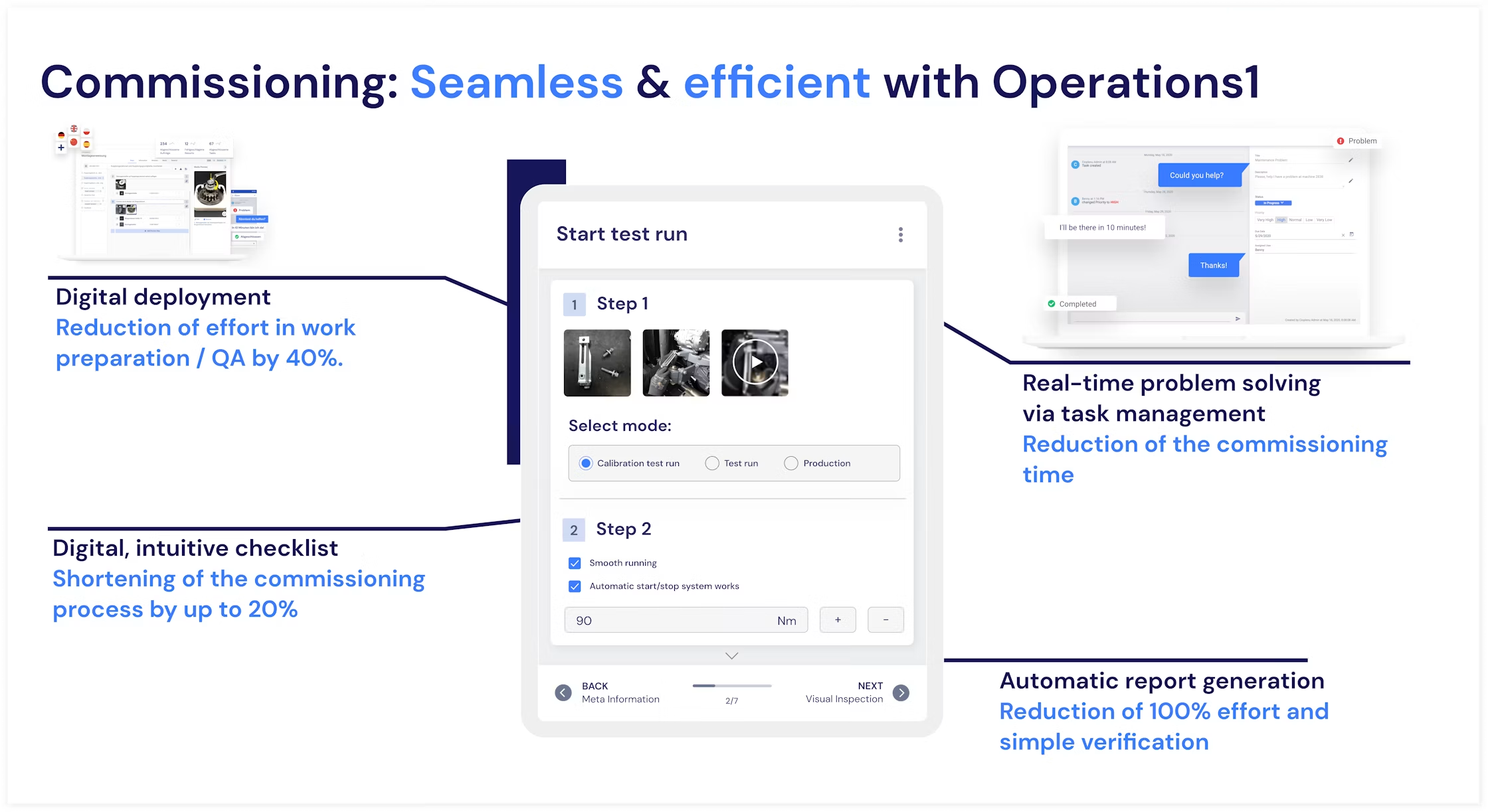
Digital Checklists Software makes it possible to capture inspection results directly at the machine. A suitable checklist handles numeric values, text, selection lists, barcodes, serial numbers, signatures and media evidence. Stored thresholds check measured values immediately. If a deviation occurs, the system opens a defined follow-up process, for example a repeat inspection, approval by quality assurance or a defect order.
Offline capability is a mandatory criterion on construction sites, in shielded manufacturing areas and on international customer assignments. The application has to provide the relevant work instructions and inspection orders locally and synchronise data in a controlled way once the connection is restored. That includes rules for version conflicts and duplicate editing.
Photos and videos deliver valuable context, for example for leaks, unusual noises or faulty motion sequences. They do not replace calibrated measuring equipment or unambiguous measured values. In practice, the combination of a structured finding, a measured value and visual evidence works best.
Complete inspection records for the customer
A complete inspection record links every inspection step to the machine, order, document version, inspector, time and result. Automatically generated reports hold up when the underlying data is complete, traceable without silent changes and clearly approved.
For a traceable inspection file, the system needs at least:
unique order, plant and serial numbers
the valid version of the inspection plan
the identity and role of the inspector
date and timestamp
measured value, unit, target value and tolerance
documented deviations and corrective actions
repeat inspections linked to the original fault
approvals and sign-offs according to the role model
a traceable change history
archived reports and the associated media evidence
An automatically generated PDF alone does not guarantee completeness. What matters is mandatory logic, change history, version control and a clear assignment of approvals. If staff carry out inspections outside the system and only add a final result afterwards, the media break remains.
Towards the customer, structured records create a shared factual basis. Queries can be answered directly at the inspection step concerned. In the event of complaints, the history shows which configuration was tested, which values were recorded and how the team handled deviations.
In practice, complete inspection records usually fail not because of the depth of inspection, but because of media breaks between checklist, photo, measured value and approval. Operations1 maps commissioning inspections as digital documents in which numeric entries with limit values and real-time error detection, photos, videos, signatures and tabular measurement capture are recorded directly in the respective inspection step.
Every run generates a report with a unique report ID that is firmly linked to the order and the document version. Reopened reports require a mandatory reason and a timestamp and are flagged as a revision, so the chain of evidence stays complete even after subsequent corrections.
hrough the task module, deviations can be assigned to a responsible person directly from a report, given a deadline and tracked by status until the fix is documented.
For connecting existing systems, an order connector for automatically importing orders from ERP or MES systems and a SharePoint connector for automatically filing report PDFs are available.
If you want to check whether a specific commissioning inspection sequence can be mapped digitally as a pilot process, discuss the use case with our Operations1 team.
What value do commissioning data deliver beyond acceptance?
Structured commissioning data supports not only acceptance, but also assembly quality, knowledge management, international standardisation and continuous improvement. The additional value appears when you analyse data systematically and feed the findings back into upstream processes.
Detecting faults from upstream assembly processes early
Recurring commissioning faults reveal weaknesses in engineering, the supply chain, assembly or software development. A systematic analysis makes these patterns visible and enables targeted corrective actions before the next order.
Useful analysis criteria are assembly group, fault type, supplier, machine variant, site, cause and process step. Metrics such as first pass yield, the number of open defects, rework time and time to resolution show where action is needed most.
A Pareto chart prioritises frequent fault patterns. Ishikawa and 5 Why support root cause analysis. For complex or customer-relevant problems, an 8D process structures immediate actions, cause verification and lasting elimination.
Findings then belong in design standards, FMEA, poka-yoke solutions, assembly instructions and inspection plans. The closed loop is what counts. A fault database without feedback into the process creates transparency, but no improvement.
Communication between team, customer and plant
Contextual communication links queries and decisions directly to the affected inspection point. Engineering, quality assurance and project management therefore receive a reliable finding from the site early.
The commissioning engineer documents the problem with a comment, a measured value, a photo or a video. The system assigns the deviation to the responsible role and tracks status, deadline and resolution. That removes the search for information in emails, chat threads and private image collections.
For collaboration with customers, you need graduated access rights. Internal root cause analyses, personal data and confidential design details must not automatically become part of a customer report. A role and approval concept separates internal handling from external documentation.
Securing experience-based knowledge and relieving staff
Digital inspection sequences turn experience-based knowledge into approved work steps, decision aids and acceptance criteria. Experienced commissioning engineers then spend less time searching for documents and filling in routine records, and more time on diagnosis and optimisation at the machine.
Knowledge can be built into the process through images, short videos, fault descriptions, limit values and conditional follow-up questions. A new employee then sees not only what has to be checked, but also how to recognise a correct condition and which action follows a deviation.
Digitising unreviewed legacy forms is not enough. Before the transfer, subject matter owners have to remove redundant items, sharpen acceptance criteria and define responsibilities. Otherwise an unclear paper process simply continues on a screen.
A governed approval process for digital work instructions and checklists works well in practice. Process owners review changes on their technical merits, quality assurance and occupational safety assess the relevant content, and the system then distributes the new version in a controlled way.
Connecting to ERP systems such as SAP
An ERP connection generates inspection orders from existing order, material and variant data and transfers the processing status back. It prevents duplicate entry and ensures that inspectors receive the checklist that matches the specific machine.
A typical data flow starts with the customer order, material number, serial number, bill of materials and configuration in SAP. From this, an order-specific inspection plan is created. After processing, status, deviations or report references flow back to the ERP, the quality management system or the document archive.
Stable master data and unique object identifiers are decisive. An interface does not resolve contradictory material numbers, missing variant characteristics or unclear system ownership. Before technical integration, the data source, the leading system and the change process have to be settled.
For a maintainable architecture, documented APIs or standardised integration mechanisms are better than direct database access. They reduce dependencies during updates and make controlled monitoring of failed transfers easier.
A single standard across international sites
A global digital standard defines shared core inspections, roles and evidence rules, while allowing controlled local additions. This combination creates comparability without ignoring country-specific regulations, languages or technical variants.
A central template defines binding process steps and quality criteria. Sites add local safety requirements, units, languages and customer-specific inspections within defined limits. Changes to the global core require central approval.
Multilingual support means more than translated headings. Technical terms, warnings, units, decimal separators and automatically generated reports have to be consistent. Free text should be supplemented by structured selection fields wherever cross-site analysis is required.
For steering, metrics such as completion rate, first pass yield, defect age and time to approval are useful. A site comparison is only reliable when definitions, inspection depth and data quality match.
How do you recognise suitable software for digital commissioning?
A suitable solution maps the complete inspection process in a mobile, offline-capable, traceable and integrable way. What matters is not the largest possible number of features, but reliable process guidance, high acceptance on the shopfloor and robust inspection records.
When selecting digital inspection documentation software, check the following criteria:
Mobile use: The application has to work on suitable smartphones, tablets and industrial devices, and remain operable with gloves or in cramped conditions.
Offline capability: Inspection plans, work instructions and entries have to stay available without a network and then synchronise in a controlled way.
Order-specific checklists: Variants, assembly groups and customer requirements have to control the actual scope of inspection.
Inspection logic: Mandatory fields, limit values, plausibility checks and conditional follow-up questions have to be configurable without custom software development.
Defect management: Deviations need owners, priority, deadline, status and documented effectiveness checks.
Version and approval management: The system has to show traceably which version was approved when and used on which order.
Change history and traceability: Changes, repeat inspections and approvals have to stay traceable permanently.
Automated reports: Customer reports and internal reports should be generated from the structured data and offer configurable content.
ERP and system integration: Documented interfaces to SAP, quality management, the document archive and other leading systems matter more than isolated export files.
Multilingual support: Content, user interface and reports have to support international teams consistently.
Roles and information security: Permissions, authentication, encryption, retention and tenant separation have to match the protection requirements.
Data export: You have to be able to export structured data and evidence in a usable format so that no uncontrollable vendor dependency arises.
Usability: Commissioning engineers have to complete frequent tasks with few entries. Complicated navigation leads to side lists and batched entries after the fact.
Scalable administration: Departments should be able to maintain checklists in a controlled way without starting an IT project for every text change.
How to run the selection
Map the current process: Record inspection types, media breaks, roles, variants and evidence obligations.
Define knockout criteria: Set offline capability, interfaces, security requirements and change history as binding criteria.
Run a real pilot: Test a complete commissioning with typical variants, deviations and poor network coverage.
Evaluate the results: Compare completeness, processing time, user acceptance, report quality and integration effort against your current process.
Define governance: Name owners for templates, approvals, master data, interfaces and continuous improvement.
A presentation with idealised sample data is not enough to decide. The better solution is the one that maps a real commissioning order from the ERP record through the mobile inspection to the approved customer record without an uncontrolled media break.
FAQ
What is the difference between commissioning and start-up?
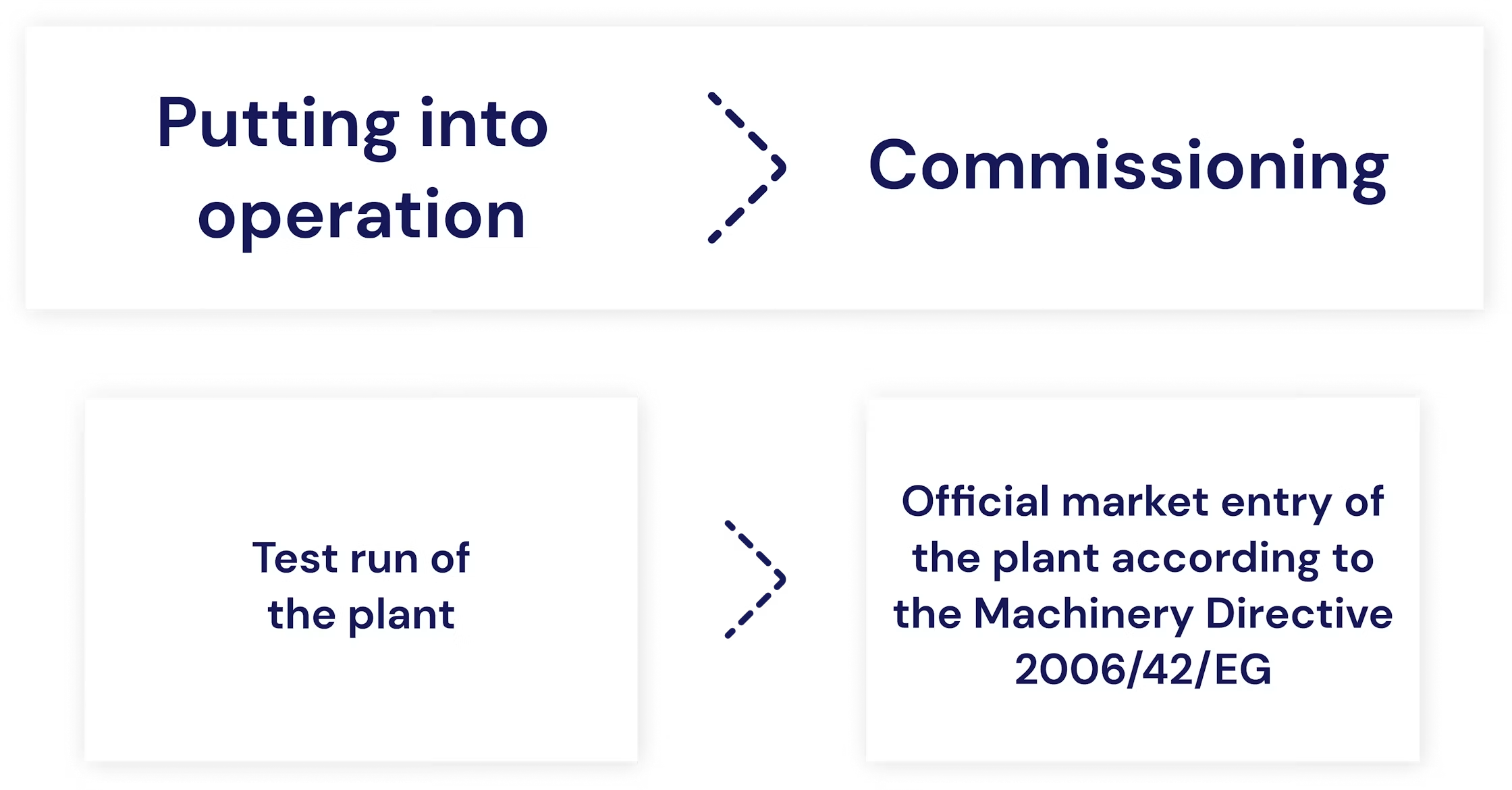
Start-up technically refers to trial and test operation before final use, while commissioning describes the transfer into intended use. In day-to-day project work, teams often use both terms interchangeably; legally, the regulatory context decides.
Comparison of start-up as test operation of the plant and commissioning as official market entry under Machinery Directive 2006/42/EC Start-up means test operation, commissioning means first use for the intended purpose under the Machinery Directive.
Start-up typically includes fine adjustment, parameterisation, checking and optimisation. The plant is already running, but has not necessarily met all acceptance and release criteria. This state requires clear access rules, safe operating modes and defined responsibilities, because protection concepts do not yet have to work fully in their series condition during test operation.
The Machinery Directive defines commissioning as the first use of a machine for its intended purpose within the European Union. Technical test runs at the manufacturer's site are distinct from this. They remain relevant for occupational safety as soon as employees work with or on the plant.
A clear status logic therefore works well in practice: mechanically complete, released for testing, in trial operation, technically accepted and released for continuous operation. This prevents a successful individual test from being mistaken for complete commissioning.
What is the difference between digital and virtual commissioning?
Virtual commissioning tests control software and machine behaviour on a simulation model or digital twin, while digital commissioning supports the real inspection on the physical machine. The two approaches complement each other: simulation eliminates faults before installation, digital documentation secures the evidence on the real object.
Who is responsible for commissioning, the manufacturer or the operator?
The manufacturer is responsible for product conformity, the operator for safe use at the specific site. The most common mistake is equating CE conformity with operational release.
For linked plants, customer-side modifications or new interfaces, it has to be clear who takes overall responsibility. Put that allocation in writing before the first inspection starts.