The 6 strategic advantages of a Connected Worker Platform over a vertical solution
In their digitization efforts on the shopfloor, many manufacturing companies are asking themselves whether they should rely on a platform or specialized software.
We highlight the two options, address the different perspectives to consider, and illustrate the 6 strategic benefits of a platform solution for frontline workers.
What it is about
In this blog article, we explain the strategic advantages of a Connected Worker Platform over specialized software.
The following topics are covered in the blog post:
- Platform vs. specialized software and the challenge of identifying the right solution
- The 6 strategic advantages of a Connected Worker Platform vs. a vertical solution
- The question of the right implementation strategy
The challenge: Identifying the right solution
Hardly any two shopfloors are alike. And yet the specialist departments and IT departments of manufacturing companies in a wide variety of industries are facing the same challenge: The increasing shortage of skilled workers, the constant pressure to improve, and other industry-specific challenges demand innovative solutions on the shopfloor in order to be able to produce sustainably. But how do you identify the right solution for you? After all, the range of technology on offer is as diverse as the activities to be carried out on the shopfloor. One strategic question is often whether to rely on department-specific software or to use comprehensive platforms.
Platform vs. specialized software: What is the difference?
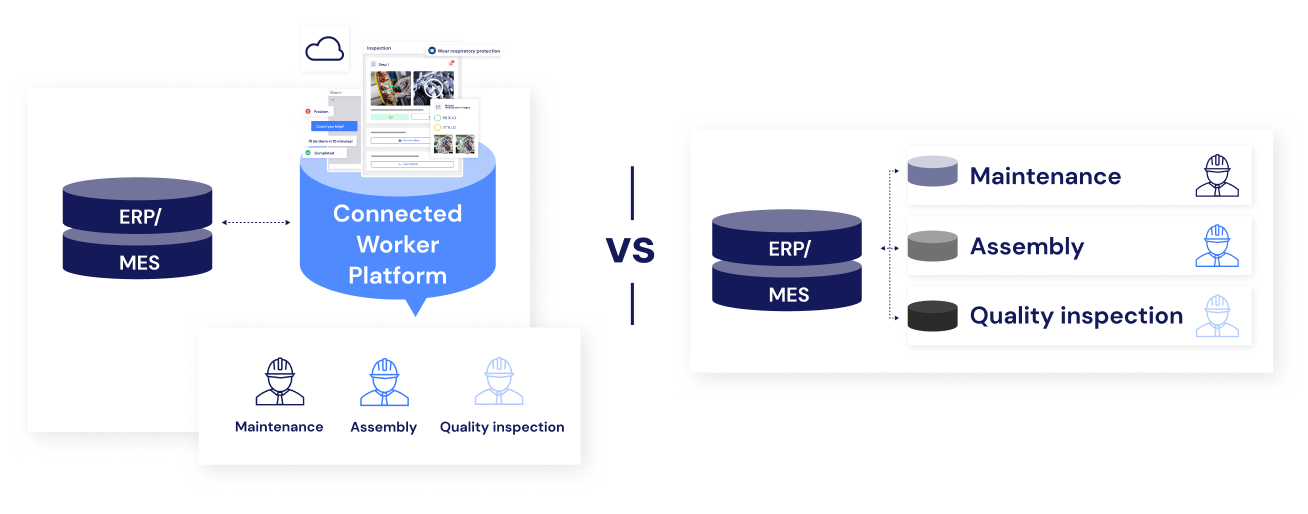
Specialized software refers to department-specific software, such as CMMS (maintenance software) or CAQ (quality management). These solutions usually bring a deep functionality scope for the specialized use case. In contrast, a Connected Worker Platform is characterized by two perspectives: the continuity of activities and the breaking down of silos of different departments.
Perspective 1: The end-to-end of operational activities
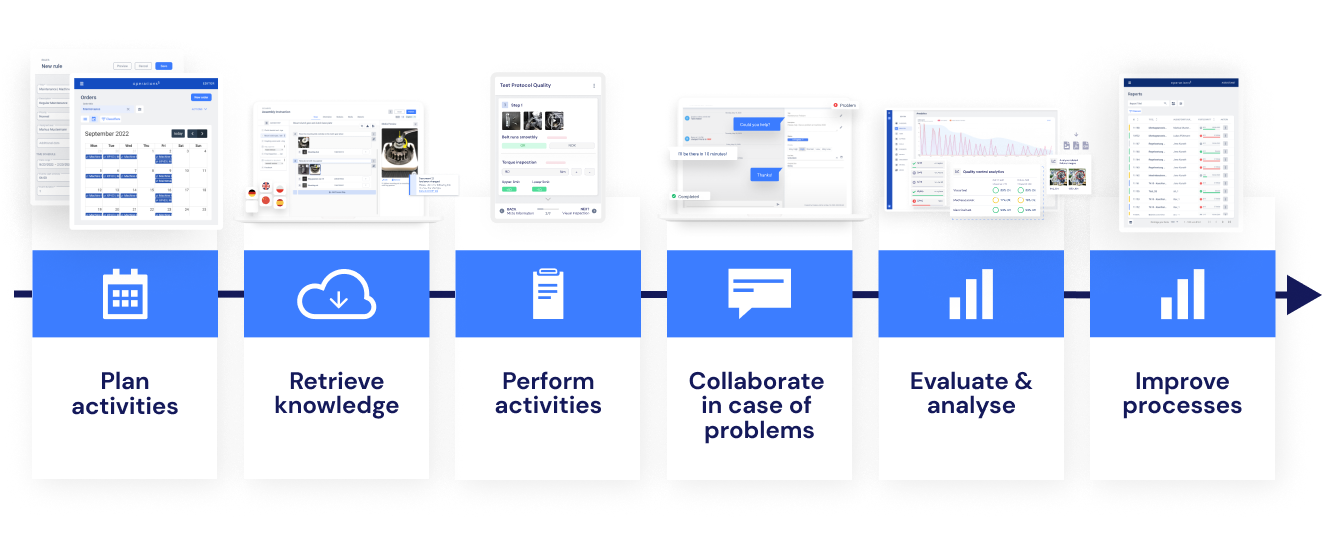
Operations1 is the platform that enables industrial companies to digitally plan, execute, evaluate and optimize all of their operational employee-led activities on a single intuitive platform, and collaboratively resolve incidents. This contrasts with solutions that are only used in sections of the workflow and require switching between systems to perform a task. With the use of a Connected Worker Platform, activities are thus carried out in an integrated manner on one platform end-to-end.
Perspective 2: Breaking down silos between operational areas
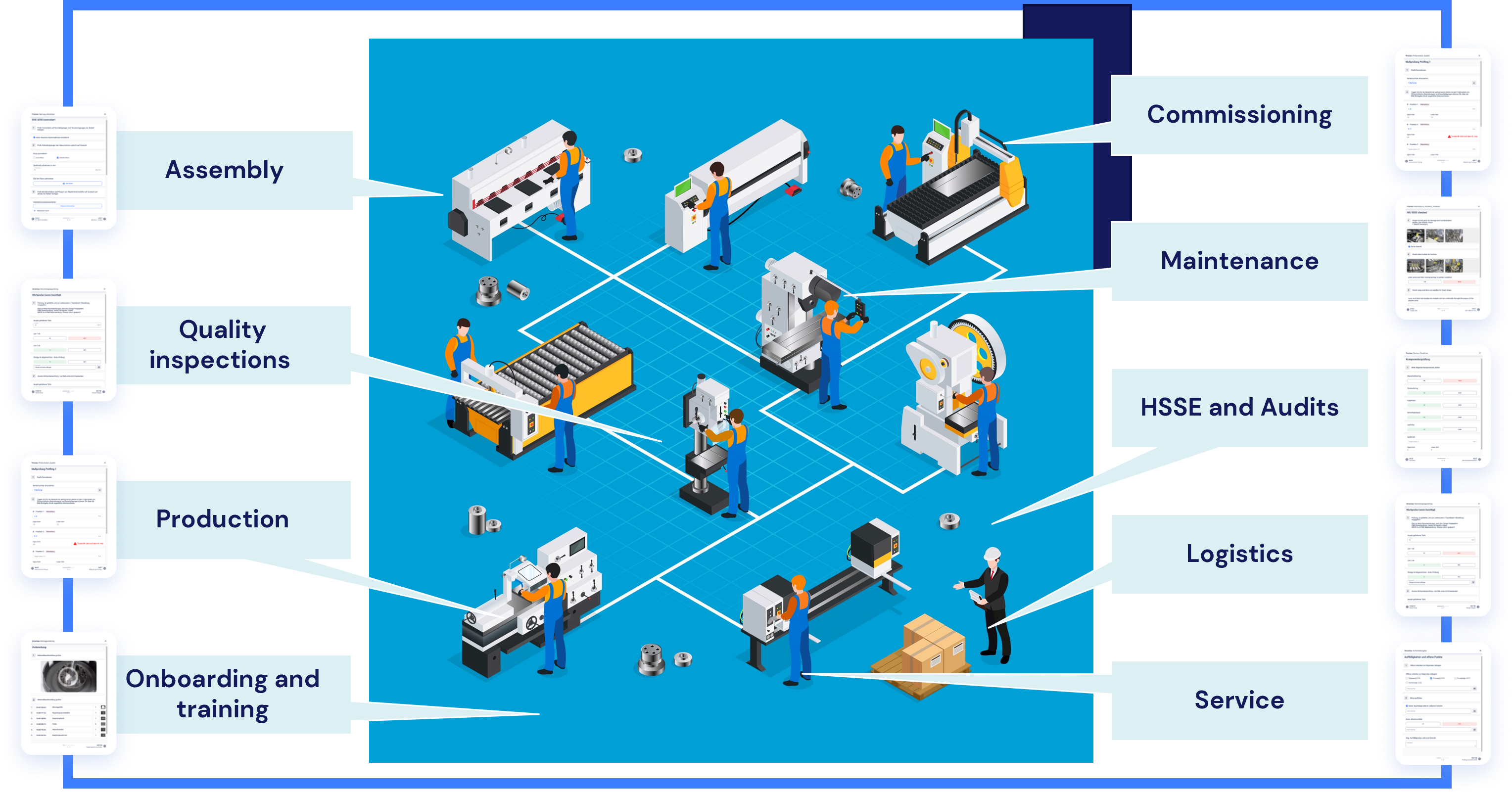
As mentioned above, vertical solutions are deployed in specific functional areas. This makes it difficult to deploy employees flexibly, leads to "mental set-up times" when an employee does have to switch between systems, and to heterogeneous data structures. Bringing data from different sources into context thus means enormous effort for harmonization and cleansing of data. This can be a risk, especially from a long-term, data-based optimization perspective of the company's own production. A platform breaks down these silos, creating consistency, process efficiency and flexibility. Typical areas of activity where a Connected Worker Platform can be used are assembly, quality inspection, manufacturing, training, commissioning, maintenance, HSSE, audits, logistics or service.
A Connected Worker Platform has 6 strategic advantages over a vertical solution
The two aforementioned perspectives of the platform (activity perspective, departmental perspective) result in 6 strategic advantages for companies, which we elaborate on below. These benefits relate directly to the employee, operational excellence, IT efficiency and the long-term sustainability of the company through data-based optimization measures and an attractive employer image.
Advantage 1: Increasing employee productivity
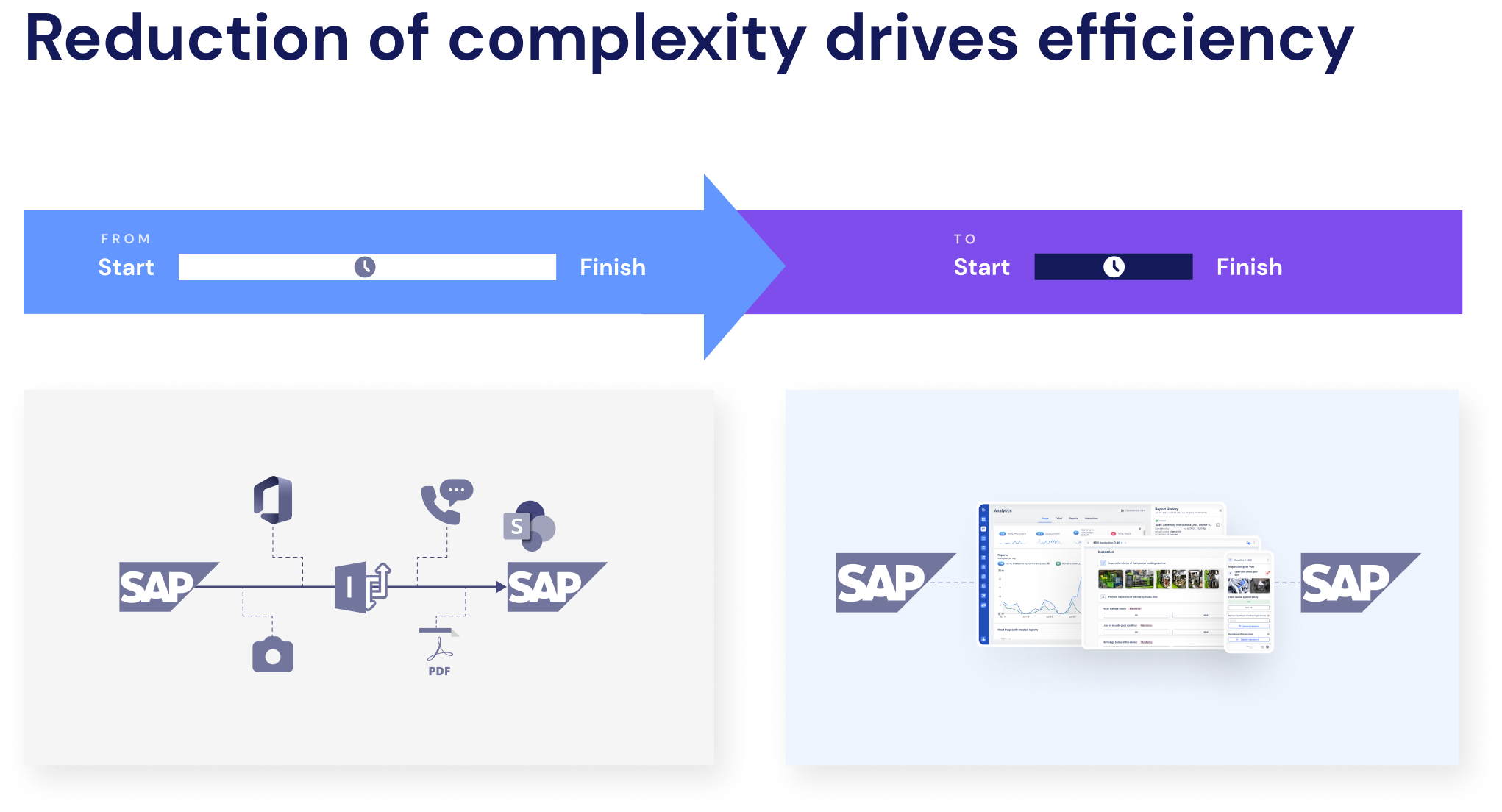
With a Connected Worker Platform, you reduce "mental set-up time" of operational staff as well as productivity losses due to system breaks between applications such as ERP, paper, and stand-alone solutions.
Operational processes on the shopfloor are often characterized by system breaks. Employees receive their work order from the ERP, use paper-based checklists, look again in separate PDFs for a work instruction and make a phone call to solve the problem. After a process is complete, documents may be scanned and stored on SharePoint. These system discontinuities are a huge cost driver and can be eliminated due to the end-to-end nature of the Connected Worker Platform. The operational employee simply works with one software interface.
In our experience, mental set-up times lead to lower productivity by up to 21%.
Co-CEO, Operations1


Advantage 2: Cross-divisional improvement
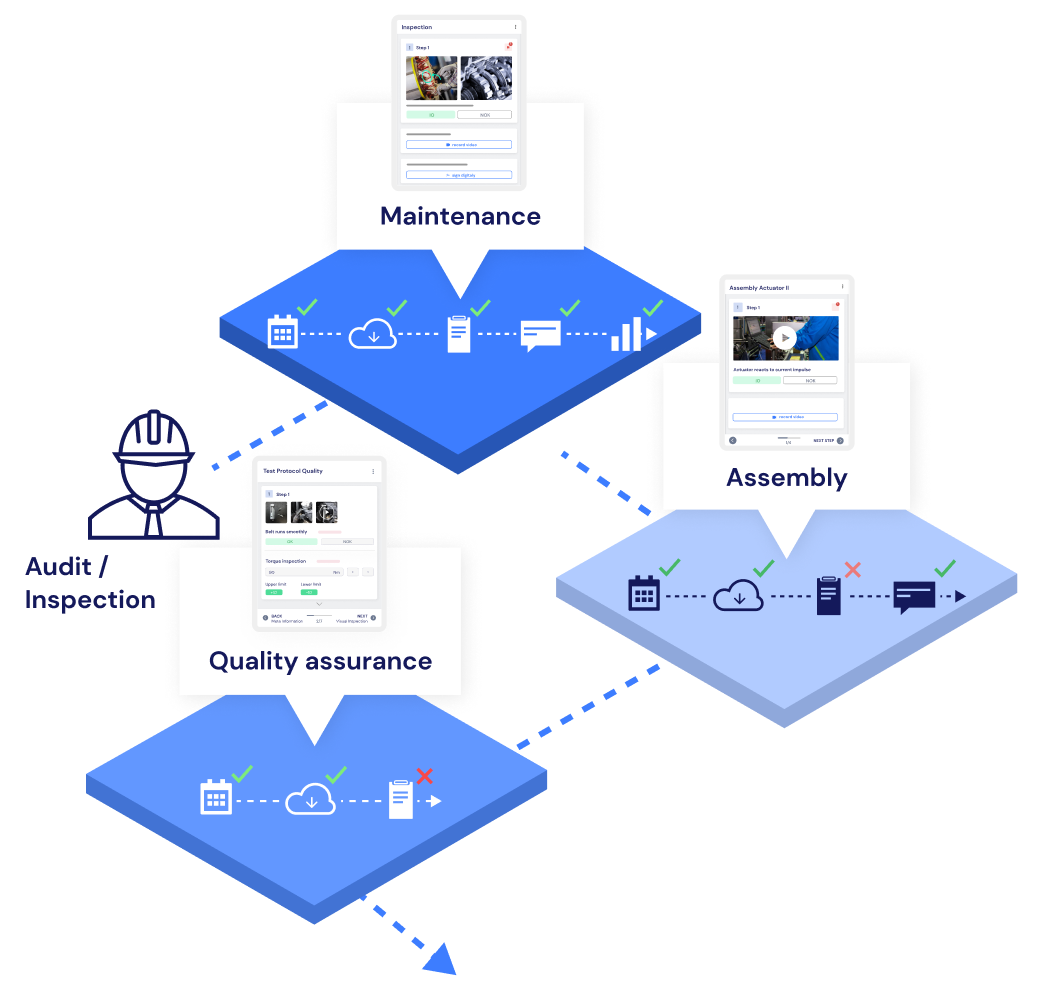
Plant tours, walk-throughs, internal audits, Gemba walks: Behind all these names and methods is the idea of identifying optimization potential on the shopfloor and initiating the implementation of measures. The practical challenge with these activities is often to track these measures systematically and transparently, as implementation must take place in the individual departments and specialist areas. With a cross-departmental platform, these silos are broken down and measures can be transparently tracked and communicated within the system.
With a Connected Worker Platform, you can thus provide complete and effective evidence of identified measures for different areas during inspections and audits, while also reducing your response times.
Advantage 3: Harmonization of IT
The shortage of skilled workers does not stop at IT in particular. The administration of systems poses capacity challenges for the company's internal IT. More and more companies are therefore focusing on IT harmonization. Standards are thus being created across locations, and isolated solutions are being transformed into overarching platform solutions. In the Future-Proof Operations podcast from Operations1, you can learn how leading semiconductor manufacturer Infineon is proceeding in this regard. Platform solutions ultimately reduce the effort required for connectivity, support and administration enormously.
In addition to more efficient administration, the platform also simplifies the implementation and scaling of solutions. Project and change management resources can focus on a few central initiatives instead of driving a multitude of projects simultaneously that may slow each other down.
Advantage 4: Flexibilization of employee deployment
The shortage of skilled workers requires that employees be deployed more flexibly and that less qualified employees also be integrated into operations. Some companies even see the topics of efficiency and employee training (apprenticeship) as important measures for maintaining German locations, as Heinz-Jürgen Prokop, CEO of the EMAG Group and President of CECIMO, announced in an interview during the Mechanical Engineering Summit 2022.
The flexibilization of employee deployment can take place at the level of individual employees, but also at a macro level for comprehensive knowledge transfer and the ramp-up of new locations. With a Connected Worker platform, you can quickly learn new employees, enabling ramp-up of new locations and better engagement of temporary workers. Watch our webinar with leading furniture manufacturer POLIPOL to learn how intuitive learning can save over 2 m€ per year.
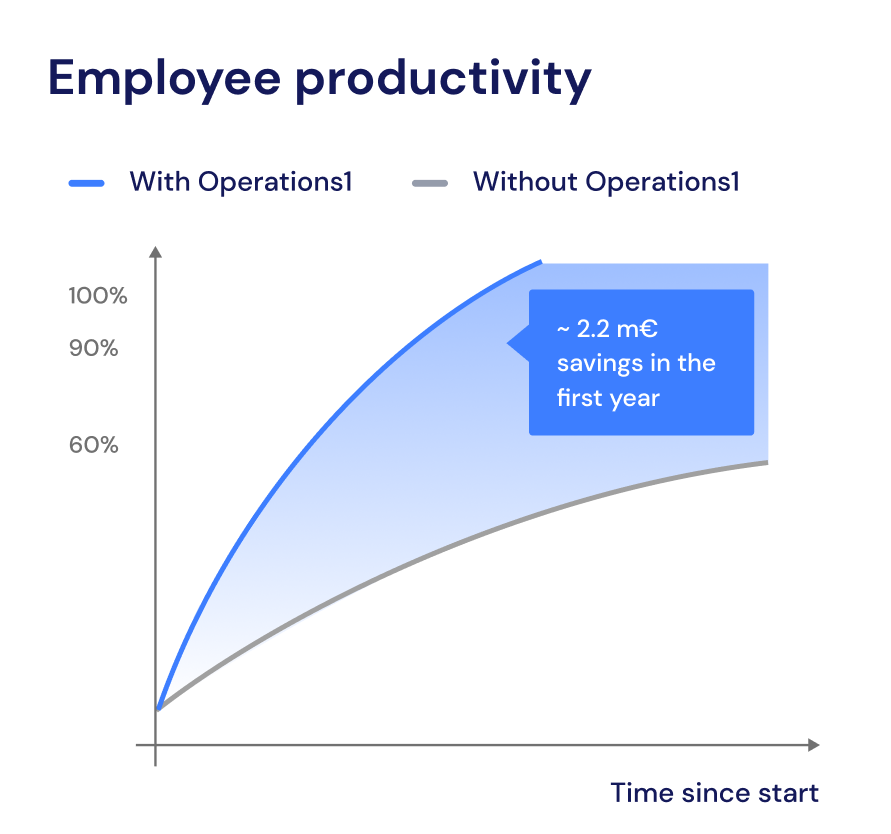
With Operations1 we were able to reduce our learning time by 67%.
Head of Future Projects / REFA, POLIPOL


Advantage 5: Increasing employer attractiveness
With a Connected Worker Platform, you create a modern, human-centered work environment for the broader workforce, increasing employee satisfaction and thus strengthening your employer brand against the competition. While vertical solutions are typically highly specialized and tailored to a smaller group of participants, a Connected Worker Platform includes the entire operational workforce. As a result, binders and old-fashioned ways of working holistically disappear from production. For new trainees in particular, a modern working environment can be a decisive reason for an employment relationship.
Digitalisation in production is an essential employer branding strategy for us.
Head of Production and Test Bench, Soudronic


Advantage 6: Break up data silos
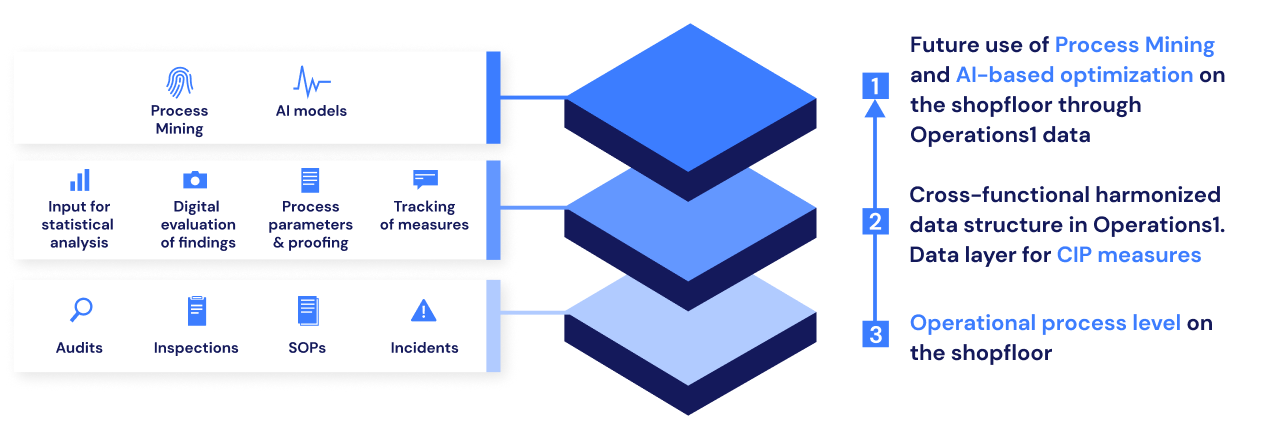
Create a company-wide basis for the continuous improvement process on the shopfloor with a platform through analyses based on a central data source. For many companies, data-based optimization of operational processes is still a pipe dream. However, the technology has long existed. The Connected Worker Platform takes on the role of systematically collecting any data from quality controls, inspections, maintenance processes, incident resolution, etc. and making it analyzable. It can therefore already collect the data that will form the basis for a data-based CIP in the future, which will possibly be supported by process mining and AI models.
Implementation: Think big, start compact
It's true that a Connected Worker Platform is usually widely deployed in companies. However, this does not necessarily mean that implementation must begin immediately across the board. Instead use cases can be developed and implemented one after the other. It has been proven that it is advisable to start in high-impact use cases such as maintenance or commissioning. Here, efficiency improvements can make a major contribution due to the high level of employee qualifications and the correspondingly particularly tight labor market situation. This in turn leads to increased momentum for further roll-out.
If you want to know how Connected Worker Platforms differ in general, what the numerous benefits are for your business, and how to choose the right platform for you, read our blog article Connected Worker Platform Guide: 7 Key Aspects.
Summary
Platforms and specialized vertical solutions are fundamentally different: While the vertical solution often includes a wider range of functions to address a specific challenge, the Connected Worker Platform can deliver six strategic benefits to manufacturing companies.
Let’s talk in person
Learn from our experts how market leaders are already maximizing their productivity with Operations1.

Guided tour of the software
Answers for your individual use-cases
Free of charge and non-binding


Moritz Stern
About the author
Moritz Stern is head of strategy and marketing at Operations1. Before joining Operations1, Moritz worked at Strategy&, PwC’s strategy consultancy. Here he advised clients from the operations environment around the globe on strategic issues. Previously, Moritz worked for Alstom Power, Merck KGaA and Arthur D. Little. Moritz holds a degree in industrial engineering (M. Sc.).
Related articles

A Connected Worker Platform represents a new category of technology that puts people at the center of the production environment. In this compact guide, you will learn why this is important, how you can proceed to implement a Connected Worker Platform, and what results you can expect.
Aug 2, 2022

Companies that believe that the only chance of digitization lies in finally getting rid of the mountains of documents are thinking too short of the issue. Digital processes are just the tip of the iceberg, as Stefan Philipp knows. The Head of Solutions at Operations1 and his team have already successfully supported many companies on their way toward connected work. In this interview, he provides in-depth insights into how networked working can optimize processes to such an extent that productivity and employee satisfaction increase significantly and six-figure sums can be saved at the same time.
Jan 17, 2023
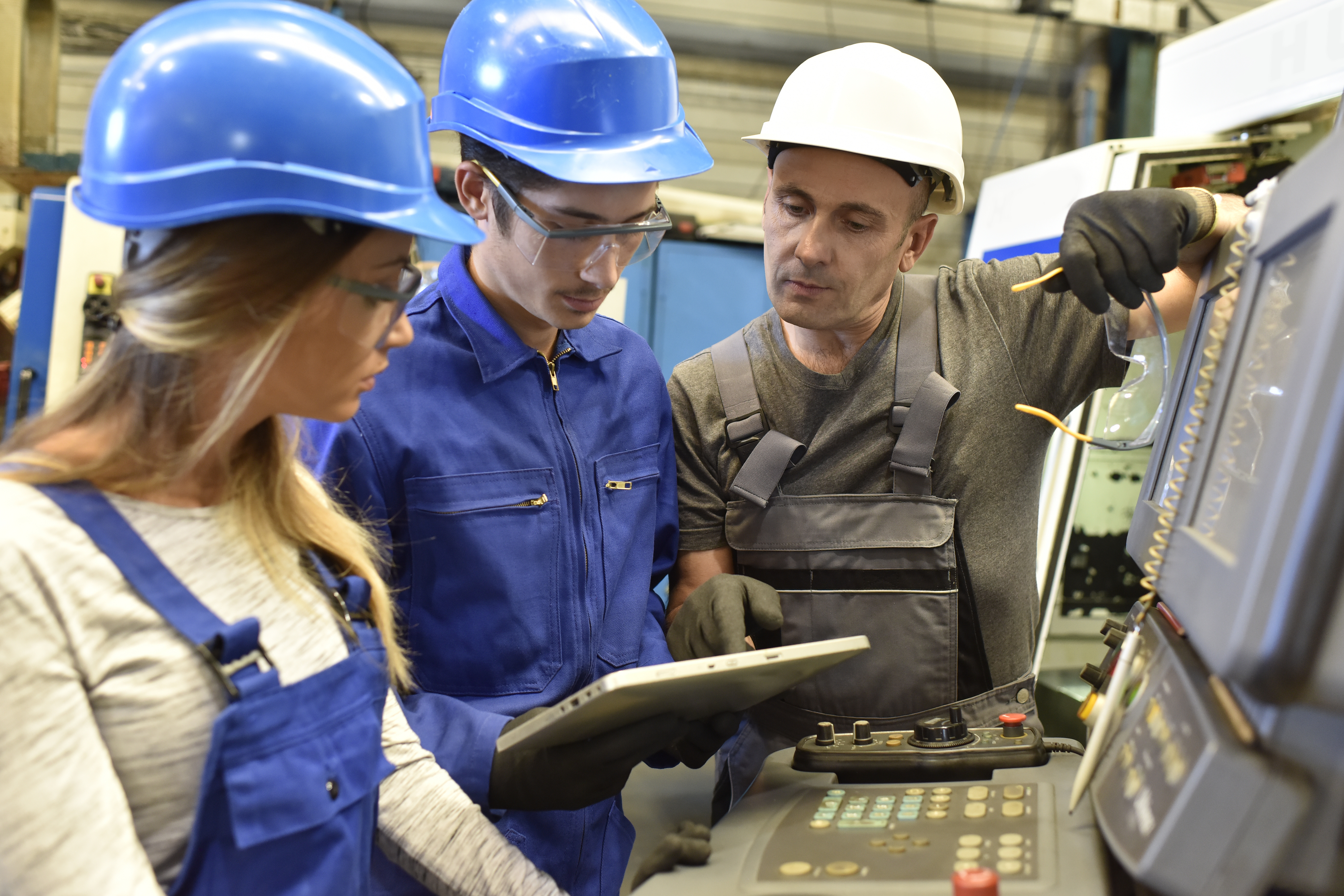
The shortage of skilled workers is one of the greatest challenges facing the manufacturing industry. It is not just a question of knowledge that is lost with the retiring experienced workforce, but also serious consequences such as declining productivity. What has been missing so far is a consistent digitization strategy that embeds the operational employee in a comprehensive digital system of connectivity.
A Connected Worker Platform represents such a solution approach, because it offers three central levers that sustainably protect against a shortage of skilled workers: knowledge retention, productivity enhancement, and employee retention.
Sep 29, 2022

The connection of operational employees has arrived on the agenda of international executives of manufacturing companies. Pioneers can already measure enormous successes, while the majority of companies are still at the stage of paper, ERP interfaces on the shopfloor and fragmented in-house developments.
Jun 30, 2022

Buzzwords like Industry 4.0 or Smart Factory are on everyone's lips. Most manufacturing companies are already investing heavily in digitization. However, this often creates data silos and increases complexity for operational employees.
Adaptive Process Execution Software helps to think holistically about the production process, to focus on the operational employee and to network the organization.
Oct 26, 2021

Offering customers a wide range of variants will not be a differentiating feature in perspective, but a standard that must also be taken into account operationally in assembly processes, testing processes and other workflows. As the number of variants increases, a suitable data structure becomes more and more important.
Oct 25, 2021