Smart manufacturing and business led transformations
In our Operations1 podcast, we had the great pleasure to speak to Jens Fath, advisory partner for operations transformation at PwC Germany. You can listen to the episode on Spotify, apple podcasts and all other major platforms. Below, you can find the transcript of this insightful interview.
The key takeaways of the conversation
- It‘s no longer a tech question to drive Industry 4.0. Identifying and focussing on use cases that scale are a key hurdle
- Business process owners are a key driver for successful change management on the shopfloor in order to create trust and commitment within the frontline
- Architecture needs to be business led. Selecting the right vendor is important. But even more important is to think ahead about future products and production and derive how the enterprise core systems need to be interconnected and exchange data
The relevance of Smart Manufacturing
Benjamin: Hi Jens. Welcome to the future proof operations podcast.
Jens: Hi and uh yeah hello together to all the listeners i'm very happy to be here thanks for having me and i'm really looking forward to our interesting and valuable discussion today
Benjamin: it's great to have you. could you give me a 60 seconds overview of who you are and what you are doing
Jens: yeah sure so my name is jens and after nine years in two other mid-sized consulting companies i joined the pwc network in 2021 in my first years of the career i focused erp projects with more focus on processes and IT afterwards i jumped into the topic of top floor and shop flow integration and especially the combination how erp systems and amir systems and others like quality systems and so on can be an enabler for digital manufacturing processes other use cases for sure like auto autonomous guided vehicles and others um where considered and with all this expertise i joined one and a half years ago now as a partner for smart manufacturing um the pwc network i'm part of the operations transformation team and we try to push the topics like s4 transformation other tacklet transformations business led architecture mes iot and all the other interesting topics that are relevant for for future operations and very important we are doing it from strategy to execution
Benjamin: Jens you mentioned smart manufacturing. Is industry 4.0 still a relevant topic for manufacturing companies?
Jens: In my opinion it is getting more and more relevant but it's perhaps handled different than in the early beginning after first lighthouse projects um and very specialized solutions the scale and the rollout ability is getting more and more in focus when we started some years ago it was more doing a lighthouse project doing something fancy that that can help us shine um in the press at the customers in the market and now it is really getting the value out of industry 4.0.
So the view is different, the focus is different, but at the end we are realizing integrated scenarios end-to-end in operations and iot and industry 4.0 is a key enabler for it so it is definitely relevant let's dive into it today we want to talk about tech transformations what are potential obstacles of tech transformations or digitalization projects in general in manufacturing companies well based on my past years of project experience.
I think i could i could explain our hours but i will focus i will focus some of them um first of all i have to say technology nowadays is definitely mature enough to be used as accelerating operations processes so companies especially smaller ones that are explaining there is a hurdle the technology is not mature enough this is definitely wrong in my opinion so technology is not a hurdle what is the hurdle is as explained before often small lighthouse projects are designed without the possibility to scale and this is this is a handicap for getting the best value out of the integrated processes and the integrated solution so this is one of the main topics so design the right use cases that are possible to scale. Second is sense of urgency in the organization this is still a topic this has to that that has to be improved um so the people are not aware about the value that's the realization of iot and industry 4.0 use cases can really bring to the company and can also bring to every individual that is working there next topic perhaps is solutions in our opinion it is key um taking product complexity business processes organization and idea architecture hand in hand so if we consider all topics and not only one of it um we can also yeah fight the hurdles and fight the obstacles that that could appear generating value race of operations efficiency must be in focus not a shiny use case so really the value and the efficiency behind and if we handle the transformation and the change because yeah it's a new world it's it's uh new topics that appear for our workers no matter if we are talking about top floor employees and and leadership or the workers on the shop floor all must be involved and all must be convinced that industry 4.0 is a key driver into key enabler for for the future let's go through the different pillars at the beginning you talked about attack and scaling the solution.
The obstacles of smart manufacturing
Benjamin: You say tech is not the problem anymore. We have the technology but scaling the technology this is the obstacle we are we're having right now.
Jens: yes um let's take hebs autonomous guided vehicles as one example um some customers are thinking about using autonomous guided vehicles in their production and in the in the intro logistics if you are taking only one use case perhaps you can find the best fitting heb for this particular use case but you need the infrastructure behind you need to train the people how to use atvs here we have perhaps regions in your factory where where you have hybrid traffic so some um some some components are delivered by people others by hovs and so on so if you only see this explanation from my site it's easy to understand that having more use cases in place that can handle by hvs is helping the scale this is the first this is the first few on this topic the second is hovs only in one plant is having a totally different scale then if you if you find out that you have similar use cases or similar processes in other plants and then you can roll it out and this is what i mean with the technology you will find huvs that are fitting for your use cases but implementing them with the right scale that's the challenge so i think this is a difficulty when it comes to the real life that you need to find one use case which you can start with and you're probably heavy happy to find one in one location for example you can focus on that one but on the other hand side you already need to have in mind that there are other use cases which are probably having the same problem or you can use the same solution for them that you are able to build a scalable solution so is it about communication and taking the organization along like you said to go that steps from one use case to more use cases step by step this is this is this is one topic to change and the organization it all starts with the strategy so the business needs a clear strategy depending on the strategy we can we can define a roadmap for the for the right use cases for scale and these three topics processes oriented on the business strategy organization and then underlined and as enabler the right business led architecture and this is why we call it business led the business use case has to scale and then we can write defined use case that we that we are implementing uh from a technical side yeah and if we talk about the culture and the organizational culture you already mentioned that you need to take the workers along how do you usually do that how do you start to communicating with them yeah perks perhaps i i start with the with one of my favorite stories when i'm talking about yeah you you see it one of my favorite topics atvs because that's a very integrated product and integrated yeah vehicle for for the digital transformation um we realized the project and to be honest the customer had too less focus on the change and into training the people and enabling the people and what happened is we realized a technical perfect solution in our opinion and the atvs were trying to bring the right components to the right machines at this customer but what the workers did is they were afraid of the hoes and so they took pellets and other stuff they found in the production and just put it into the way of the atvs so they really handicapped the efficiency of the atvs and what we did then is we tried to push the reset button at the at these workers we took them on a training session and explained them hey if this he is bringing your products and your components to the right place you can focus on other topics on more interesting topics not so repetitive not so time and and power imp intensive you do not have to to to take heavy material and bring it from place a to place b and so on the atv is supporting you and the other topic was and that's a bit funny the funny part of the story um the heb builder learned the agv to talk so if they found a road blocker there was not only a sound or light that was that was blinking the atv also talked in the language where we realized this project talked with the worker and yeah asked for help so it was really bringing together the technology part with some yeah human behaviors to be honest uh together with the well-trained people and after this everybody understood that atvs in this context where a really really good enabler and and raised efficiency uh quite good so that's with one example explained what what you asked um training on the one hand side and it is not a stupid technology it must be technology that's really fitting in the conversation and in the collaboration with the people that are that are working in in such an environment as i understand it right now you need a strategy which is covering all three pillars which you mentioned so we have the processes we have the organization and we have the architecture but i assume all of that three pillars need to be communicated in the right way to the workers because at the end they have to to work with that or within that transformation um do you have a dedicated role within such a transformation process a wall or position somebody who is taking care of that communication because i assume it's not that easy to break all that different topics which have some complexity here and there down to operational level yeah for sure for sure we have dedicated roles for example the transformation manager and the change manager but key for convincing the people will be the global business process owner if the process owner understands how to raise efficiency and how to use this new technology um i am sure that he can train his people so this is the process owner has an internal role at our customers and for sure we can help to convince with our transformation management change management measures and so on very professional methods but at the end it's the trust and the trust is much higher if a global process owner internally of the of the company is convinced and helps to convince and train uh the workers that that have to work in it on a daily basis with such technology
and do you use other case studies from other companies for example to explain the workers how does that usually work what is the the impact of such a transformation or how do you um yeah get that picture to the workers yeah what is being done or what will be done in future yeah so so first is for sure we start understanding the strategy and the vision behind and this is more theoretically to be honest the second is understanding the technology and the advantages of the technology and this is where we definitely use the use cases of other customers as i explained now with this automatic guided vehicle um where we have exactly the hurdle and how this how this can uh can be handled in in reality so as i said it's it's trust and commitment and trust we can only we can only generate if we are listening to the people and if we are explaining with real example uh real examples no matter if positive or negative how others solved this challenge you already mentioned that project about automated guided vehicles i would like to get a little bit more hands-on and understand what are typical requests from customers in terms of digitalization of operations so what do they usually want from you if they approach you with a new project what is happening right now this differs a lot so on the one hand side we have very general asks for digitalization strategy the request to to build a roadmap the request for use case ideation and so on so these are more the the smaller and more strategic ones um others are really asking for an end-to-end solution and this is how it happened some years ago with this heb case and the customer only had the idea doing not longer line production but doing a matrix production driven by algorithms and driven by iot devices like these atvs so we really had to start with the plant layout with where are the supermarkets in this plant um how is the production set up what are the perfect production islands we did this together with the planning department of the of the customer for sure for the plants but this was a really really good collaboration and after this then we discussed the end-to-end topic and enhanced the process and plant layouts or more the strategic topics with the business-led architecture and decided hey an atv for example needs a very very strong plm integration because master data is key that the hov knows what component is needed where and what product has to go after what station to what other station so plm integration was key the second was the integration between erp and mes um so what data has to be transferred for the production orders for the warehouse orders and so on and a lot of other system components for sure the shop floor devices the atvs itself were involved so our challenge is it
Doing no matter the request the customer asks us doing the sensibilization that of these end-to-end synergies end-to-end depending scale of the use case of the plants that are involved but also end-to-end from top floor to shop floor um the vertical integration that is needed um as an architecture base and i repeat it sorry but it must be business led so business business is in focus and often and cio or um production i.t is asking us for solutions and our our our main answer is hey let's bring the parties together and discuss is it it really business-led.
Yeah this is a super interesting topic and we will go a little more deep dive into that business led um topic but beforehand one question you talked about the request of the customers and you said there are two directions or two pillars strategic questions for requests and going hands-on going into technical implementations building end-to-end integration for example um is there a shift happening or did that happen in the past that we are going more into the concrete problem into the implementation and do not talk about strategy alone definitely i'm very and i'm very happy about it because um the strategy is okay the road map is okay but values generated if if we are really realizing the right use cases so the customer understands more and more and the market understands it and also we as consultancies at the learning curve there we have to discuss strategy we have to discuss the business capabilities and then we have to select the right components that are enabling it and this can be a normal legacy i.t system this can be an iot device this can be something something different so i would definitely agree there is or there was a shift and this is why in my opinion the impact of industry 4.0 is is getting improved more.
Smart Manufacturing: Business-led transformation
Benjamin: Let's get a little bit more into the topic of the business led transformation as you call it. If we have a company in front of us and this manufacturing company that wants to digitalize um a lot so not just the digitalization of the shop floor but other connected processes departments will be digitalized as well we want to have end-to-end processes like you said end-to-end integration and you say when we start to build that strategy and that roadmap for it we need to think about a business-led approach so can you explain that a little bit more what does that mean so how do you approach it we want to digitalize a lot within that company and you are starting with that business-led approach how does it work okay so perhaps i explain it as well with an example
Jens: Some some weeks ago a customer asked me could you please visit us we are having with our problems with our mes solution and we want yeah to find a new strategy perhaps we want to do an and system evaluation um and implement something new and so on and this workshop was one of my highlights in the last in the last weeks to be honest because um what we did is we painted on a on the flip chart an erp system as a core system in the middle and then we started to discuss the satellite systems and this is how we explained to the customer that it is not a question if the mes system is from render a or window b the question is how is plm linked how is meslinked how strong is the erp core what role are the systems of differentiation that how we are calling it playing in this end-to-end architecture in what directions the strategy moves in what direction the production processes move and important how is the product complexity developing so we really have to start with the product complexity talking about modules and so on because if we are doing this we're having a direct impact on the processes perhaps we have very complex processes because of a very complex product architecture if we are changing it in the first step and the first step is engineering we are having impact on the processes if we are having impact on the processes the core systems perhaps look the same but the systems of differentiation have to cover different processes than in the past and this is the first thing where we try to convince our customers where where we should act together before a transformation program because this is the base and this is why we are calling it business led because engineering um for product structure and complexity and processes are directly linked to the business topics and if we are realizing then solutions that are fitting for these future processes and future product structure then we are then we are we are generating real value and we are raising efficiency and because then we we are not only having an i.t transformation then we are really taking the moment and having an end-to-end transformation and this is in my opinion uh what we need so he answered means if somebody's calling you and says hey ants we need a new mes can you do that and can you build a strategy for it you will say stop um let's take a look on the bigger picture we cannot do that like that so i assume the the whole projects could be bigger than expected is this the case on the one hand side yes it is the case on the other hand side this is exactly the challenge we are facing so we have some customers they really want to have an mes solution and then for sure we are helping him with this problem but we definitely sensibilize and explain the value out of this end-to-end um topic and end-to-end strategy and end-to-end transformation if the customer says yes understood and i have enough time and perhaps i have i can increase the budget and so on then we are doing the the big one if not for sure with all our expertise we can also help with the smaller one but considering also the topics left and right so this is this is uh yeah the approach that that then we are going
you mentioned budget already when we stay within your example um how much does it cost what is needed to have a transformation like that yeah it's hard it's hard to to to speak about euros at the end i would i would change it more on the project duration um for smaller topics for sure we are often talking about small assessments for four weeks and more strategic definitions a project review and so on this is then more developing north stars and so on 8 to 12 weeks i would say and if you're talking about really large transformation that are covering all the phases starting with the strategy then moving into the architecture topics and at the end doing the implementation for sure uh yeah depending on the size of the company and the complexity of the processes but then we are talking about one year two years three years really depending depending on the size
so as i understand a tech transformation can be bigger than initially expected because there are some more ingredients and some information needed to build that business yeah that business led architecture or to go that approach and you for example mentioned you have to take a look on the products on the product complexity on the product modules and this is all influencing how the architecture in the end and how the tech transformation in the end will look like is there something which customers which are thinking of a transformation like that can do upfront before they reach out to you and start to get to approach that tech transformation before i answer it perhaps a quick comment it seems to be bigger in the first moment at the end this approach helps us to focus on the right topics perhaps a customer wants to have an overall transformation and says okay i have really to touch all systems after our architecture review and the transformation strategy perhaps uh we we realized that the core can be leaner than expected other systems can can still be in place for the future so we are right we try to focus with the customer on the right component so at the end it must not really be bigger than expected uh in the in the first moment um and answering your question um for sure the customer can prepare something for example having a business process owner organization in place is key to success another topic is having a clear demand management between i.t and the business in place is also a success factor because then we start with another base the people are used working together and so on and then it's easier having a business led tech transformation then some companies were organized like this in the past having really a clear um separated organization i.t and business so these are the topics clear describe processes an idea where the pain points are where um there are capabilities that you want to build but that are not already in place all these topics are really worthwhile um input parameters for our project for sure and the rest it's teamwork and i'm sure that outside in perspective from other customers from other use cases as explained before are generating value as well in these discussions so it can be prepared in advance but it's not a must-have
Smart Manufacturing: How to start?
Benjamin: We are coming to our last question and this is another example case as well let's assume you are the cio of a manufacturing company 1000 employees you are still working a little bit legacy so in the manufacturing space for example there is a lot of paperwork you don't have a mes in place you have a old legacy erp but there's no more digitalization going on you decide now i would like to go into the digitalization direction i would like to go into the direction of smartphone smart manufacturing industry 4.0 which topic do you put on your agenda today how do you start
Jens: the most important issue based on my answers in the in the last minutes it's quite easy for me to answer i think the my starting point is i have to bring together business anti-t more and more i need a clear process responsibility that should be in the business and i have to shape the sense of urgency in my organization and my organization means i.t and business departments sense of urgency of transformation of the possibilities of new technology and at the end of integrated architecture and i repeated integrated architecture starts with product architecture means second processes means third organization the roles that are involved and last but not least it is still i.t and technology
Benjamin: Thanks a lot for being on the podcast. T learned a lot it was super inspiring to talk with you and hope to see you in one of the next episodes.
Jens: Thanks a lot from my side. I hope there were interesting insights and we see each other soon.
Conclusion: When used correctly, digital preventive maintenance lays the foundation for resilience and operational excellence.
Let’s talk in person
Learn from our experts how market leaders are already maximizing their productivity with Operations1.

Guided tour of the software
Answers for your individual use-cases
Free of charge and non-binding


Benjamin Brockmann
Benjamin Brockmann (M. Sc., Management & Technology) founded Operations1 in 2017 together with Daniel Grobe (also M. Sc., Management & Technology). The founders developed the software solution based on various practical projects, including at the Fraunhofer Institute, and on their experience in industry, auditing and management consulting. Benjamin Brockmann has already worked for companies such as KPMG and Arthur D. Little.
Related articles

A Connected Worker Platform represents a new category of technology that puts people at the center of the production environment. In this compact guide, you will learn why this is important, how you can proceed to implement a Connected Worker Platform, and what results you can expect.
Aug 2, 2022

Total Productive Maintenance (TPM) is a comprehensive maintenance concept to enable a trouble-free production system. In our detailed TPM guide, we explain the complex term and its history, explain the different building blocks of TPM, go into the advantages and disadvantages of the method using examples, and illustrate the introduction. In the end, it becomes clear that companies that want to move with the times cannot avoid digital TPM.
Aug 10, 2022

Most manufacturing companies have already recognized that there is no alternative to digitizing production. It is therefore all the more surprising that the clipboard has still not been banned from the shopfloor and that operational employees still work with paper-based process descriptions.
Yet digital documentation has invaluable advantages. Easy drag-and-drop creation and customization of digital documentation and the ability to provide multilingual instructions are just two of them. Our blog post sheds light on others.
Aug 18, 2022
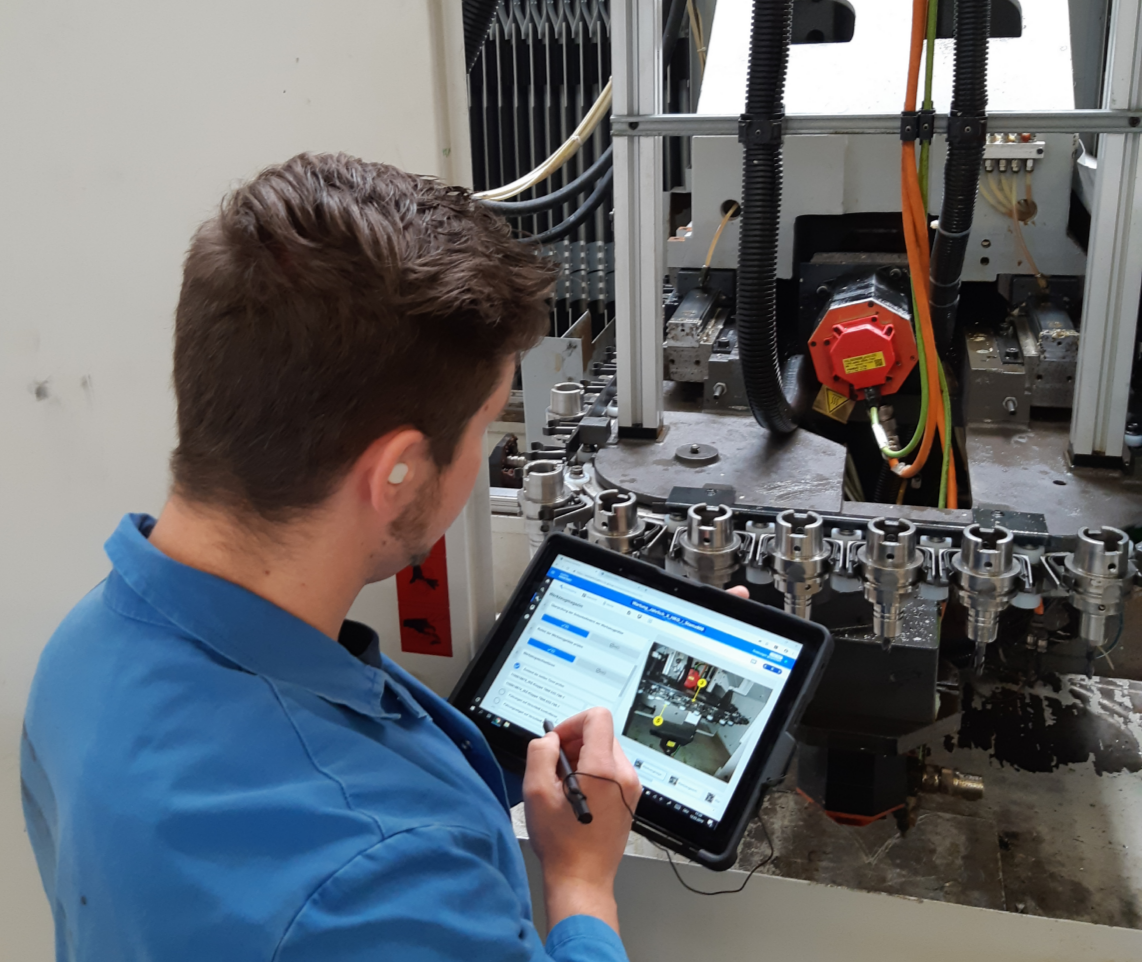
Autonomous maintenance helps workers take more responsibility for their plant by removing the strict division of tasks between production and maintenance. Among other things, companies can thereby increase their productivity, reduce costs and position themselves for the future.
This blog post will provide you with comprehensive information about the concept of autonomous maintenance and explain the benefits as well as how to implement it. Read at the end what added value a digital maintenance approach offers and how our software solution supports you in this.
Aug 24, 2022

Buzzwords like Industry 4.0 or Smart Factory are on everyone's lips. Most manufacturing companies are already investing heavily in digitization. However, this often creates data silos and increases complexity for operational employees.
Adaptive Process Execution Software helps to think holistically about the production process, to focus on the operational employee and to network the organization.
Oct 26, 2021

Offering customers a wide range of variants will not be a differentiating feature in perspective, but a standard that must also be taken into account operationally in assembly processes, testing processes and other workflows. As the number of variants increases, a suitable data structure becomes more and more important.
Oct 25, 2021