
In regulated industries such as medical technology or automotive, clean approval processes decide whether you stay audit-ready and in control of quality. Yet informal coordination by email or Excel slows operations down and creates risk through version conflicts. Multi-level review processes bring every relevant role into the loop systematically and make sure only approved content reaches the shopfloor.
Key takeaways
A multi-level review splits the review of a document across several defined stages, each with a clearly assigned role.
It applies wherever engineering, manufacturing and quality management decide together on a work instruction, an inspection plan or an SOP.
Every approval is recorded with a timestamp and the responsible person, which forms the basis for internal reviews and audits.
Versioning and targeted change communication are part of the process. Without them, the shopfloor keeps working from outdated content.
Handled digitally, the process removes the administrative overhead that paper and email routing create.
What is a multi-level review process?
A multi-level review process is a defined sequence in which a document is reviewed and approved by several responsible roles, either one after another or in parallel, before it becomes valid. Each stage has a defined responsibility, a documented decision and a clear position in the sequence. In manufacturing, the term is used interchangeably with multi-stage approval process.
Why is a single approval not enough?
Process reliability means more than a formally approved document. It only exists once content has been checked for technical accuracy, tested against daily practice and clearly approved.
Work instructions in particular touch several perspectives:
Engineering assesses technical feasibility.
Manufacturing checks whether the instruction works in daily practice.
Quality management ensures conformity with standards and audit requirements.
A single approval step does not do justice to that complexity. Multi-level reviews follow the four-eyes principle and involve different functions in a structured, binding way. The moment you write a work instruction, you also define who reviews it later.
How do you map approvals clearly and bindingly?
For multi-level reviews to work efficiently, three questions need answers up front: who reviews what, in which order, and what happens when questions come back?
Digital multi-level approval processes give you:
clearly defined approval stages
role-based responsibilities
sequential or parallel reviews
full traceability of every decision
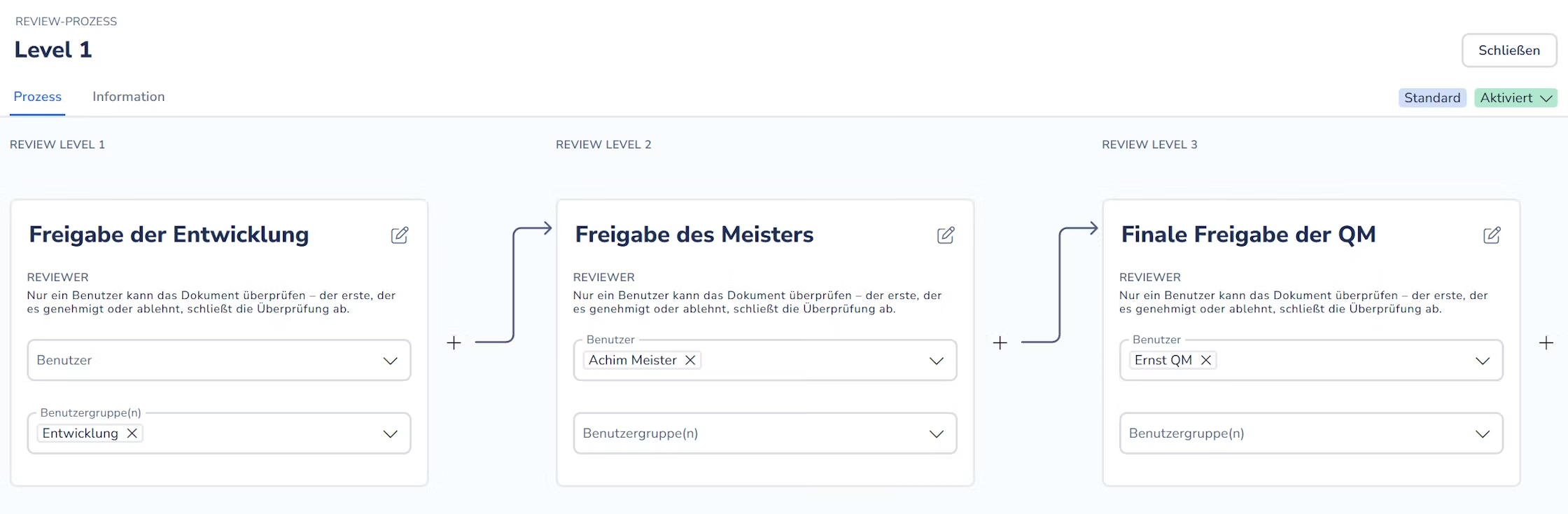
Depending on the document type, whether a work instruction, an inspection record or an SOP, you can map different review logics. Every approval is documented automatically with a timestamp and the responsible person. That creates solid ground for internal reviews, audits and regulatory inspections, without extra administrative effort.
What transparency does a multi-level review create?
A central benefit of multi-level approval processes is transparency about the review status. Everyone involved can see at any time:
which approvals are already done
which steps are still open
where questions or delays sit
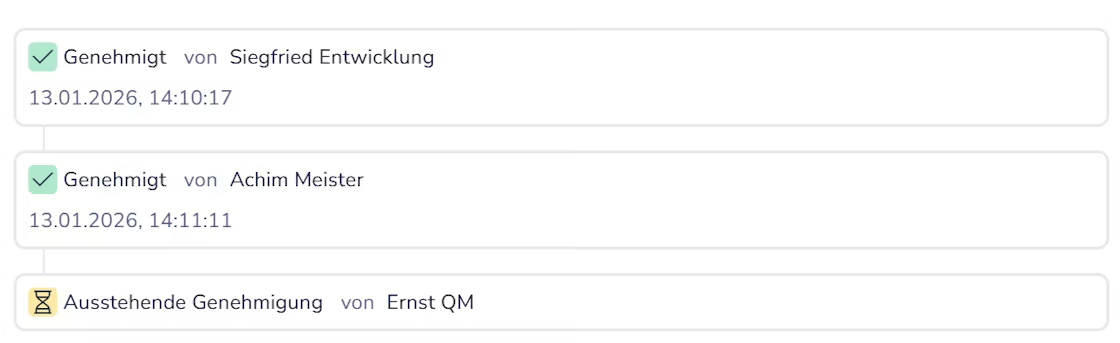
This transparency cuts coordination effort, prevents standstills caused by unclear responsibilities and speeds up approvals. At the same time it makes the review process more binding.
How does versioning secure the approval?
Process reliability does not end with the initial approval. Document changes are unavoidable in manufacturing, whether they come from process adjustments, new standards or lessons learned in production.
Digital multi-level reviews enable automatic versioning:
Every change is documented.
Approvals are assigned unambiguously to one version.
Earlier versions stay available in an audit-proof archive.
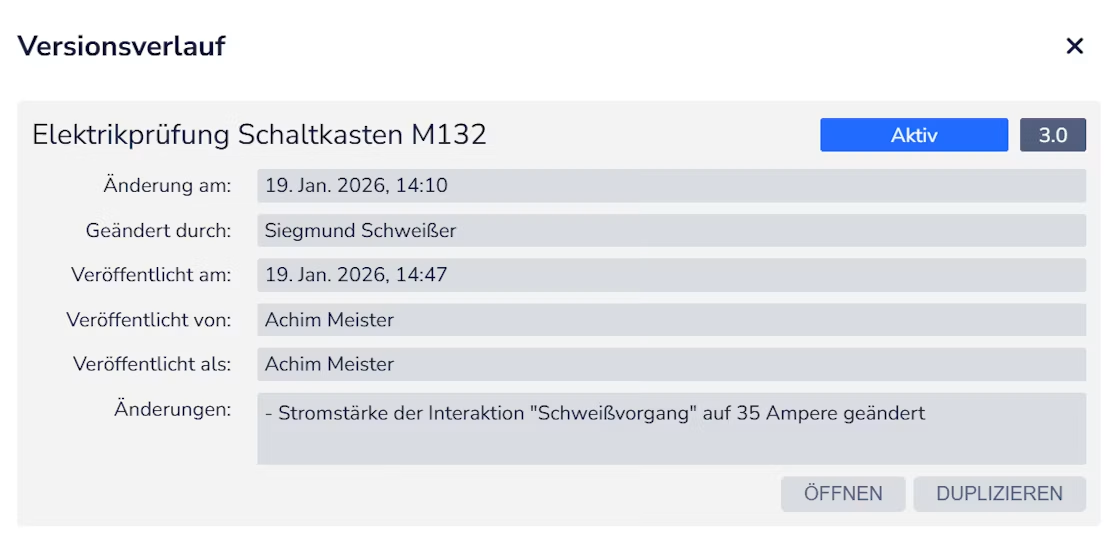
That means you can trace at any time which content was valid at which point. For an internal audit and for complaint cases, this is the decisive evidence.
How do you communicate changes without creating risk?
A common weak point in classic document processes is how changes are communicated. If new versions are not distributed cleanly, people keep working from outdated instructions.
Digital approval processes push relevant changes to the affected roles or sites. Approved content is then not only formally correct, it actually arrives where the work happens.
How do you produce evidence without extra effort?
Alongside document approval, the documentation of completed work plays a central role in process reliability. Whether for internal quality assurance or external audits, evidence has to be complete, correct and available long term.
In digital workflows this evidence is captured automatically in the context of the approved instruction and archived in an audit-proof way. Companies get reliable documentation without additional manual effort.
How do you run multi-level reviews with Operations1?
With digital work instructions software from Operations1 you map approvals exactly this way. Administrators configure any number of approval stages, for example department, quality and plant management, and assign a role or user group to each stage. A new document version is only published once every stage is complete. Each approval is recorded with a timestamp and approver, and the current status opens directly in the review dialog by clicking the document status "Pending approval". The same principle applies to SOPs you manage with SOP software.
Conclusion: multi-level reviews as the foundation of reliable processes
Multi-level approval processes are not an administrative detail. They are a central lever for process reliability. They make sure work instructions, SOPs and process documents are reviewed by the right people, approved traceably and documented cleanly. Companies that run multi-level reviews consistently in digital form reduce errors, improve audit readiness and build stable processes across sites, shifts and roles.
FAQ
What is the difference between a review and an approval?
The review is the content check carried out by a responsible role. The approval is the binding decision at the end of a stage that either triggers the next step or makes the document valid.
How many approval stages make sense?
As many as there are functions genuinely affected, usually two to four. Every stage needs its own responsibility and its own review criterion. Otherwise it only extends lead time.
Can approvals run in parallel instead of sequentially?
Yes. Parallel reviews shorten lead time when the stages are independent of each other. Sequential reviews make sense when one stage builds on the result of the previous one.