
With more than 120 systems for heat and surface treatment, Schwäbische Härtetechnik Ulm (SHU) is Germany's largest contract hardening company, and its highly diverse equipment depends on reliable maintenance. A first attempt to digitalize maintenance had failed due to low employee acceptance, so Word templates and paper binders remained the standard for years. With Operations1, SHU fully digitalized maintenance on its second attempt: planning is now centralized and automated, instructions are updated in seconds instead of days, and the documentation convinces both customers and certification bodies.
Key Takeaways
Schwäbische Härtetechnik Ulm GmbH & Co. KG (SHU), heat and surface treatment (contract hardening)
Digital preventive maintenance with automated maintenance planning
Since the end of 2022, 100% of maintenance has run on Operations1, starting from a three-month pilot with the first system groups
Changes to maintenance instructions are available instantly with a few clicks instead of after several days
Maintenance planning is centralized with maintenance management, and recurring maintenance is generated automatically as orders
The Starting Point
For a contract hardening company, equipment availability is the business model. Customers from the automotive and construction machinery sectors, the rolling and ball bearing industry, mechanical engineering and fastener manufacturing expect quality and on-time delivery, and both require perfectly maintained furnaces and systems. This is exactly where the existing process reached its limits.
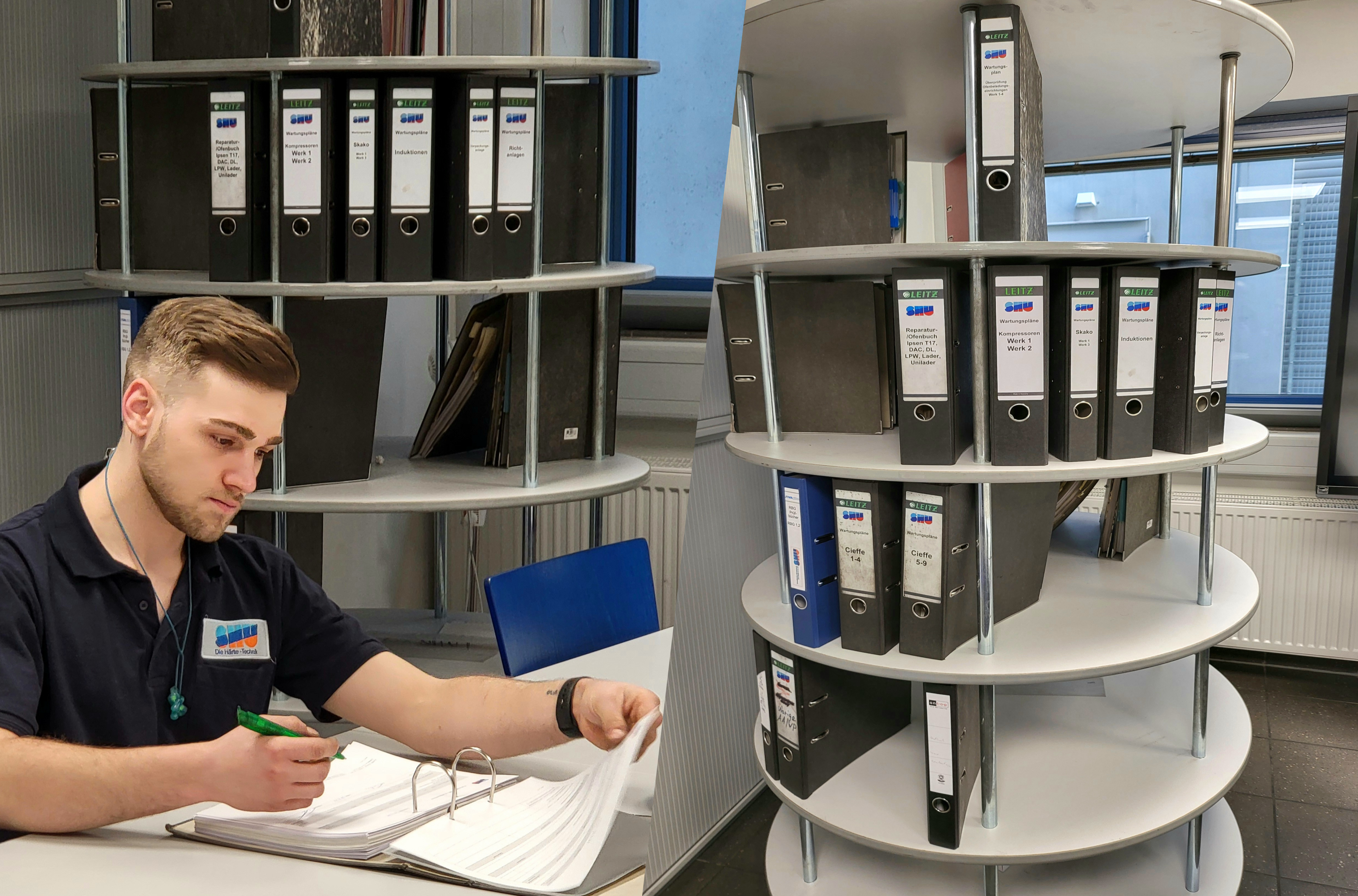
The maintenance manager created and maintained every maintenance checklist as a Word template for photocopying. Given the diversity of the equipment, this meant considerable manual effort. When technicians had feedback or change requests, it often took several days before a new version was available. To avoid falling behind, teams kept working with outdated documents in the meantime.
Planning was decentralized as well. Each system group had its own maintenance binder, and the responsible employees organized annual, quarterly, monthly or weekly maintenance themselves. The result was inconsistent maintenance standards from one system group to the next. Documentation existed only in handwritten form in binders, was sometimes illegible and hard to trace during later analysis. Maintenance management could only check the current status by looking in the binder of the respective employee.
Mautsch, Assistant to the Management, had been pursuing the idea of changing this for years. A first attempt with a mobile maintenance software failed, however: the solution lacked usability, the hardware of the time was slow, and older employees in particular, who were not yet used to mobile devices and apps, never warmed to it. SHU returned to paper. That experience shaped the second attempt: this time, acceptance on the shopfloor was not a side issue but the central selection criterion.
The Path to the Solution
In summer 2019, SHU decided the time was right for a new attempt. Tablets and smartphones had become more powerful and easier to use, and older employees were now using smartphones in their private lives. Mr. Mautsch became aware of Operations1 through a talk at Ulm University of Applied Sciences given by Hirschvogel, a company that also uses Operations1 in maintenance.
SHU deliberately started with preventive maintenance, where the need for action was greatest and the fastest value could be expected. From the outset, however, the vision went further. "Initially, we saw the greatest value in maintenance. But Operations1 is software for the entire company," says Mr. Mautsch. Another goal was to lay the foundation for a unified IT landscape.
SHU drew a clear lesson from its failed first attempt: Mr. Mautsch presented the software to those responsible for maintenance and involved all interested employees from day one. Together with Operations1, SHU prepared a three-month pilot phase and defined the first system groups for the trial. Since no integration with a leading system was required, Operations1 was introduced as a stand-alone solution, which kept the implementation lean. SHU highlights the project management by the Operations1 team and the close feedback exchange as one of the reasons for its decision.
Feedback from the maintenance team was so positive that Operations1 was gradually rolled out to additional system groups. Notably, a working student created and managed the digital maintenance checklists for all system groups, because the software can be used without lengthy training. Since the end of 2022, Operations1 has been in use across 100% of SHU's maintenance.
The new process at a glance:
Digital maintenance instructions: Maintenance management creates and updates instructions in the Creator's drag-and-drop editor and embeds images and videos directly.
Mandatory interactions: Required steps ensure that no inspection is skipped and that measured values are recorded traceably.
Rules and order management: Recurring inspections and maintenance tasks are automatically generated as orders via rules and assigned directly to technicians.
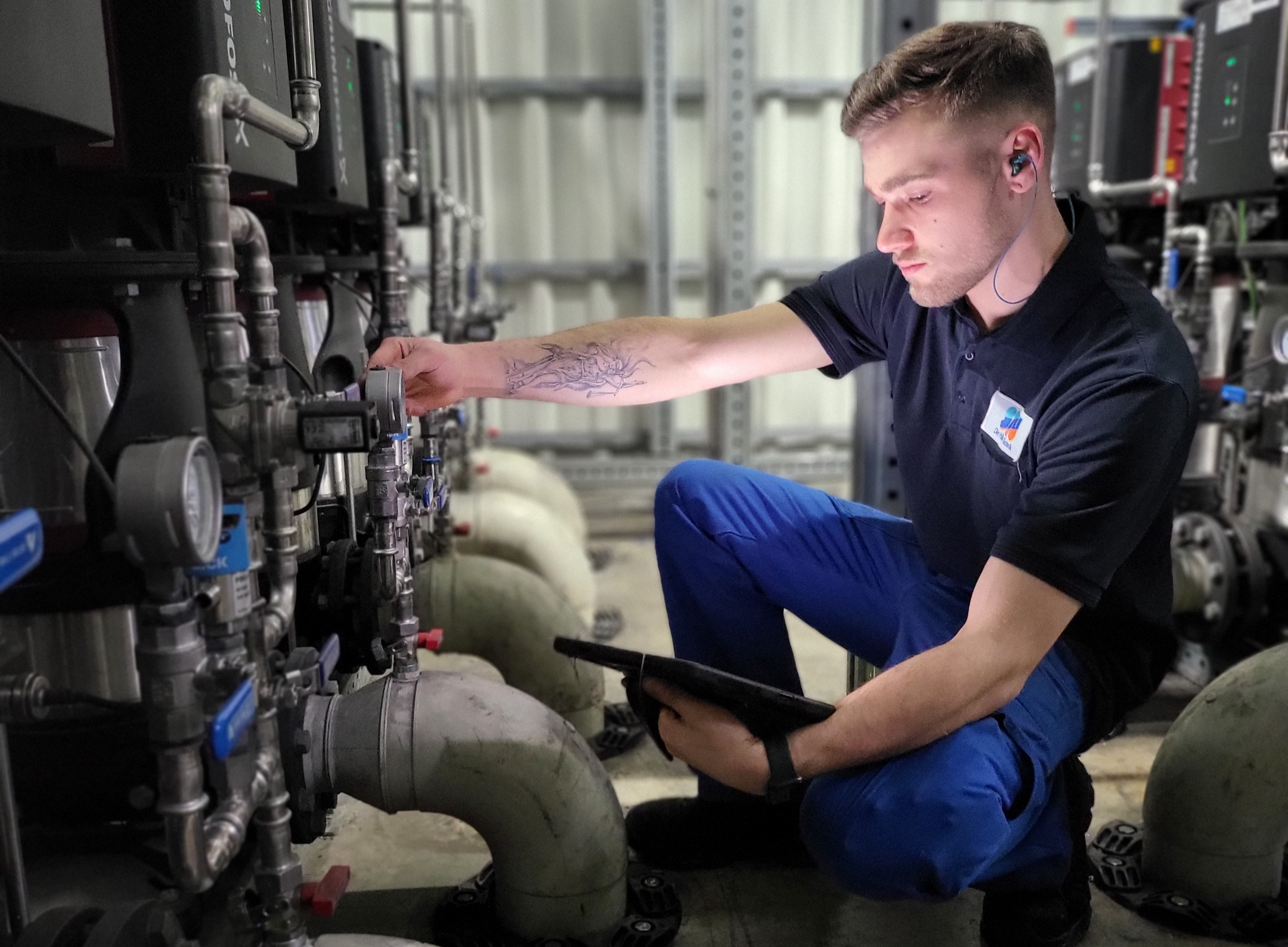
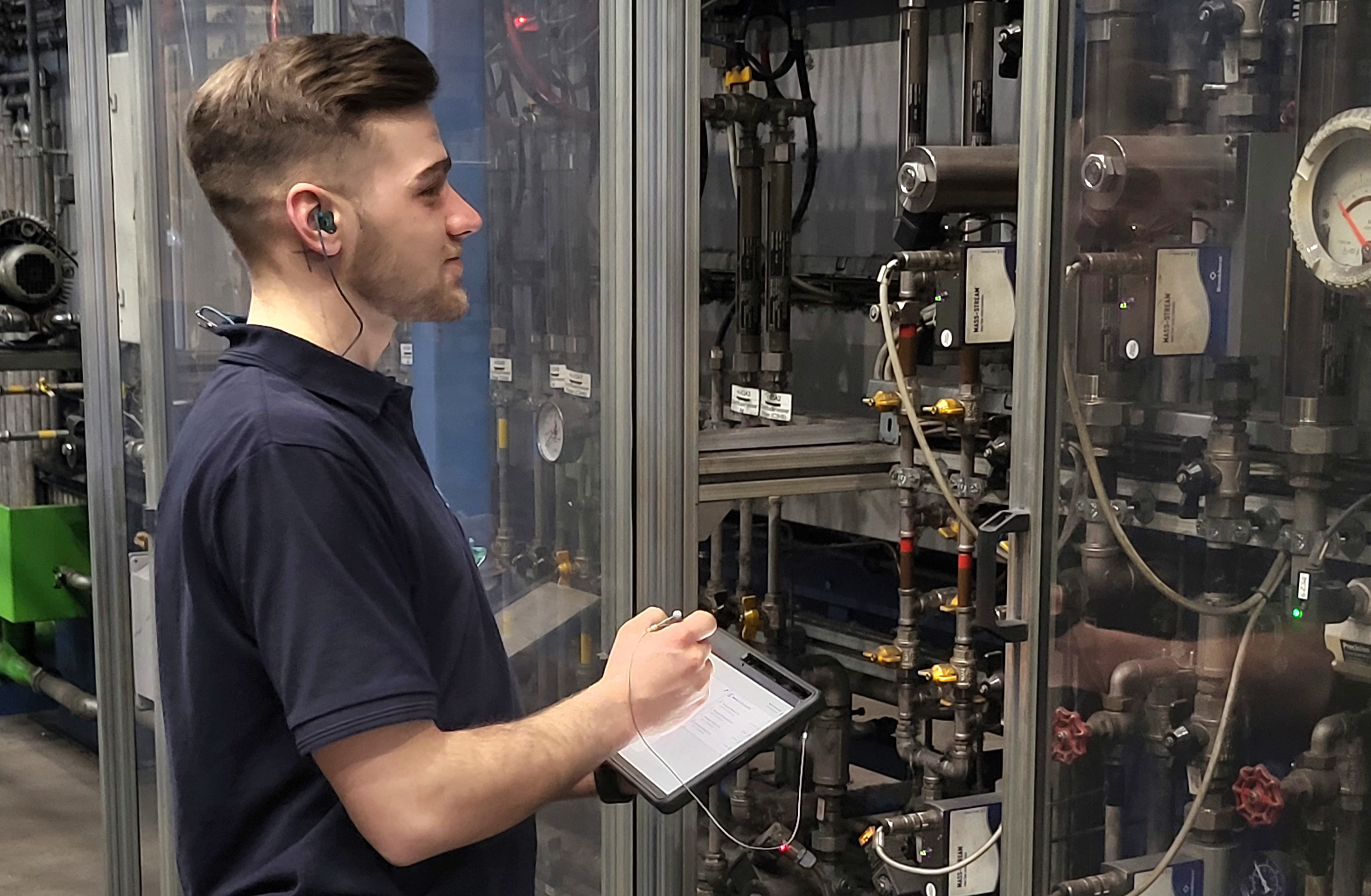
Dashboard in the Assistant: Technicians see their orders on a tablet or smartphone and start right away, without searching for the right document.
Digital reports: Every maintenance task is documented automatically and completely, and can be found at any time via search and filters.
The Results
Full rollout: Starting from a three-month pilot in 2019, SHU moved 100% of its maintenance onto Operations1 by the end of 2022.
Updates in clicks instead of days: Improvement suggestions from technicians, which previously took several days to be reflected in the maintenance instructions, are now available instantly with a few clicks.
Centralized, automated maintenance planning: Instead of decentralized binders per system group, maintenance management plans all recurring maintenance centrally, and orders are created automatically.
The most noticeable change concerns control. Where maintenance management previously had to ask around or leaf through binders, it now sees status, progress and due dates in real time. "Giving maintenance management the opportunity to have a real-time overview of all maintenance activities is a huge added value," says SHU. Thanks to automated maintenance planning, SHU reliably prevents machine downtime and responds faster when problems occur.
At the same time, standardization and mandatory interactions ensure a consistent level of quality across all machines. Digital reports have strengthened SHU's evidence toward customers and auditors, and the former searching through A4 binders has given way to search functions and filters. "Operations1 is very well received by both our customers and certification bodies when it comes to professional documentation".
The culture has changed too. Employees submit improvement suggestions with photos and comments directly in the digital checklists, giving continuous improvement a clear structure. The workforce has embraced the solution with high acceptance, in direct contrast to the first digitalization attempt. And Operations1 has long since grown beyond maintenance: in the training workshop, apprentices complete 5S checklists for workplace cleanliness digitally, making them familiar with the platform from their very first day.
Outlook
SHU now plans to transfer these experiences to other areas. Next, Erbacher Härtetechnik GmbH & Co. KG, which has been part of the group since 2004 and works closely with SHU, will introduce Operations1 in maintenance. At SHU itself, a rollout into production is planned: multilingual work instructions will support non-German-speaking employees there, for example in Turkish, Serbian or Romanian. This turns Mr. Mautsch's view that Operations1 is software for the entire company into reality.
About SHU
Founded in 1979, Schwäbische Härtetechnik Ulm GmbH & Co. KG is an owner-managed family business with around 600 employees at its site in Ulm-Donautal, Germany. With more than 120 systems for heat and surface treatment on 65,000 m², SHU is considered Germany's largest contract hardening company and offers all common processes for order volumes of any size. Its customers include companies from the automotive and construction machinery sectors, the rolling and ball bearing industry, mechanical engineering and fastener manufacturing. Quality, on-time delivery, price, innovation, service as well as environment, occupational safety, health protection and energy form the six pillars of the company's success.