
Liebherr-Verzahntechnik GmbH builds large machines for gear manufacturing at six production sites worldwide. For decades, much of the assembly knowledge behind these machines existed only in the heads of experienced assemblers. As these specialists retired and the company became more international, one thing became clear: this knowledge had to be captured and passed on so that every site builds the machines the same way. Today, Liebherr-Verzahntechnik works with multilingual digital assembly instructions, has cut training effort by up to 70%, and relocates product lines in a third of the time it used to take.
Key Takeaways
Liebherr-Verzahntechnik GmbH, machinery and plant engineering (machine tools and automation for gear manufacturing)
Knowledge management and training in the final assembly of large machines, across sites
Relocation of a product line now takes one year instead of up to three years (−66% time required)
Up to 70% less effort to train new employees; one trainer now supervises five temporary workers at the same time
50% shorter training time for Chinese assembly colleagues in the pilot project, compared with historical values
The Starting Point
In machine building, where large machines are complex and come in many variants, the quality of the final product depends heavily on the experience of individual assemblers. That is why Liebherr-Verzahntechnik has always seen its employees and their specialist knowledge as the company's most important resources. And it was exactly this resource that came under pressure.
As experienced specialists retired, the company risked losing assembly knowledge built up over decades. At the same time, the number of applicants fell, as did the number of employees with long service. The market for temporary workers also remained tight. New colleagues were trained using the master-apprentice principle. This took several weeks and was made even harder by language barriers. The work processes themselves were complex and paper-based, while product development cycles kept getting shorter.
The second challenge came from the company's international setup. Pre-assembled modules are shipped to subsidiaries in countries including China, India, Brazil and the USA, where assembly staff carry out the final assembly. Different working methods and individual experience led to differences in assembly quality between sites and among external assembly partners.
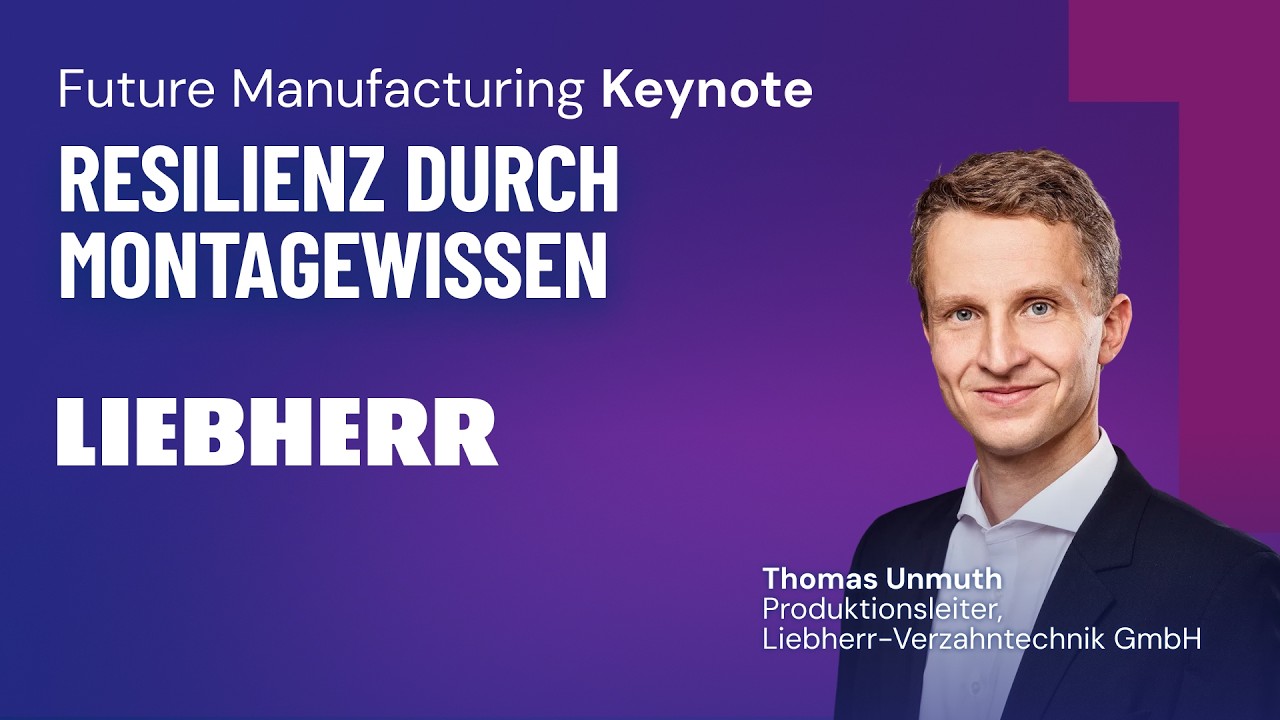
"We have many international sites and an incredible amount of specialist knowledge in the heads of our employees. That's why we were looking for a solution to document it properly and for the future, and to make sure that every site builds the machines the same way and the quality stays the same," says Thomas Unmuth, Head of Production at Liebherr-Verzahntechnik GmbH.
During its analysis, Liebherr-Verzahntechnik made a telling observation: the skills shortage, setting up new sites and bringing in external assembly partners all come down to the same requirements. The company needed a solution that would let production document its own work steps, work in several languages, ensure the same work processes at every site and fit with existing systems. And every employee had to be able to use it, regardless of their experience with tablets or PCs.
The Path to the Solution
After extensive research, Liebherr-Verzahntechnik chose Operations1. The deciding factors were its ease of use, its multilingual capabilities and the document management functions it already had built in: versioning, permissions, an approval workflow and a modular document structure. Operations1 could also be connected to existing systems later on.
"Operations1 stands out for its simplicity: creating and working with digital multilingual instructions is quick and easy, and anyone can do it," says Martina Waldmann from Industrial Engineering at Liebherr-Verzahntechnik.
An Ambitious Pilot: A Complete Large Machine
Instead of starting with a small test case, the team chose an ambitious pilot: documenting the complete build of a large machine and training staff at the subsidiary in China. The project was deliberately driven by the shopfloor. Operations1 was first introduced as a stand-alone solution, with no connection to other systems. As a result, Liebherr's internal IT team was needed only to set up Single Sign-On (SSO).
Documented by Production, for Production
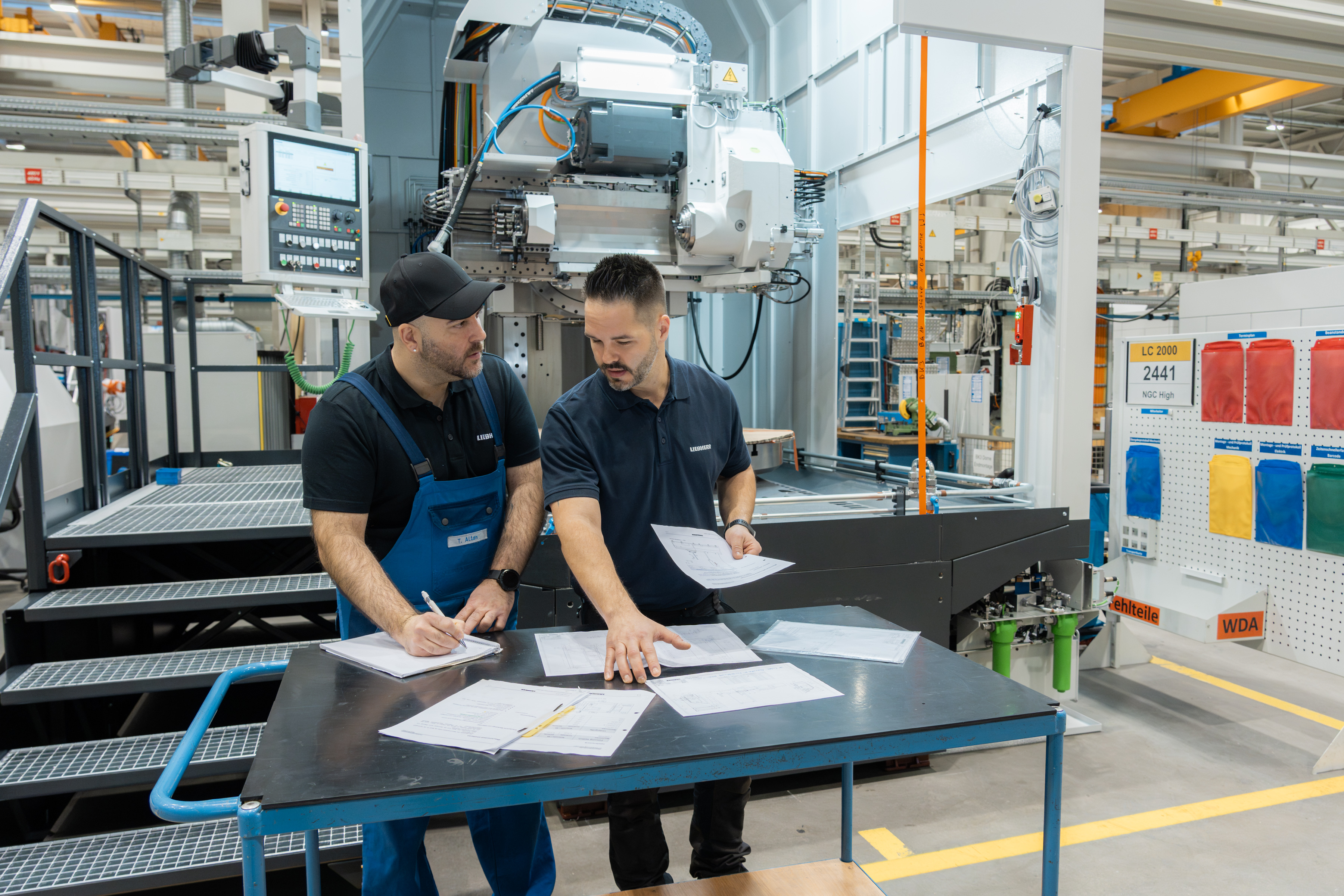
Because the knowledge for final assembly had never been written down, a long-serving assembly employee took on the job of capturing it, together with the project leads. In Operations1, he created step-by-step instructions with images for each module. Modular documents make it possible to show the individual differences between machines without having to maintain a completely new set of instructions for every variant.
"Thanks to modularity, we can use variant-specific digital instructions in Operations1 to show the individual differences between our machines perfectly, and that makes them easier to communicate to our employees," explains Thomas Unmuth.
The team then translated the instructions into Chinese in just a few clicks, using the built-in AI-based translation feature.
The Real-World Test in China
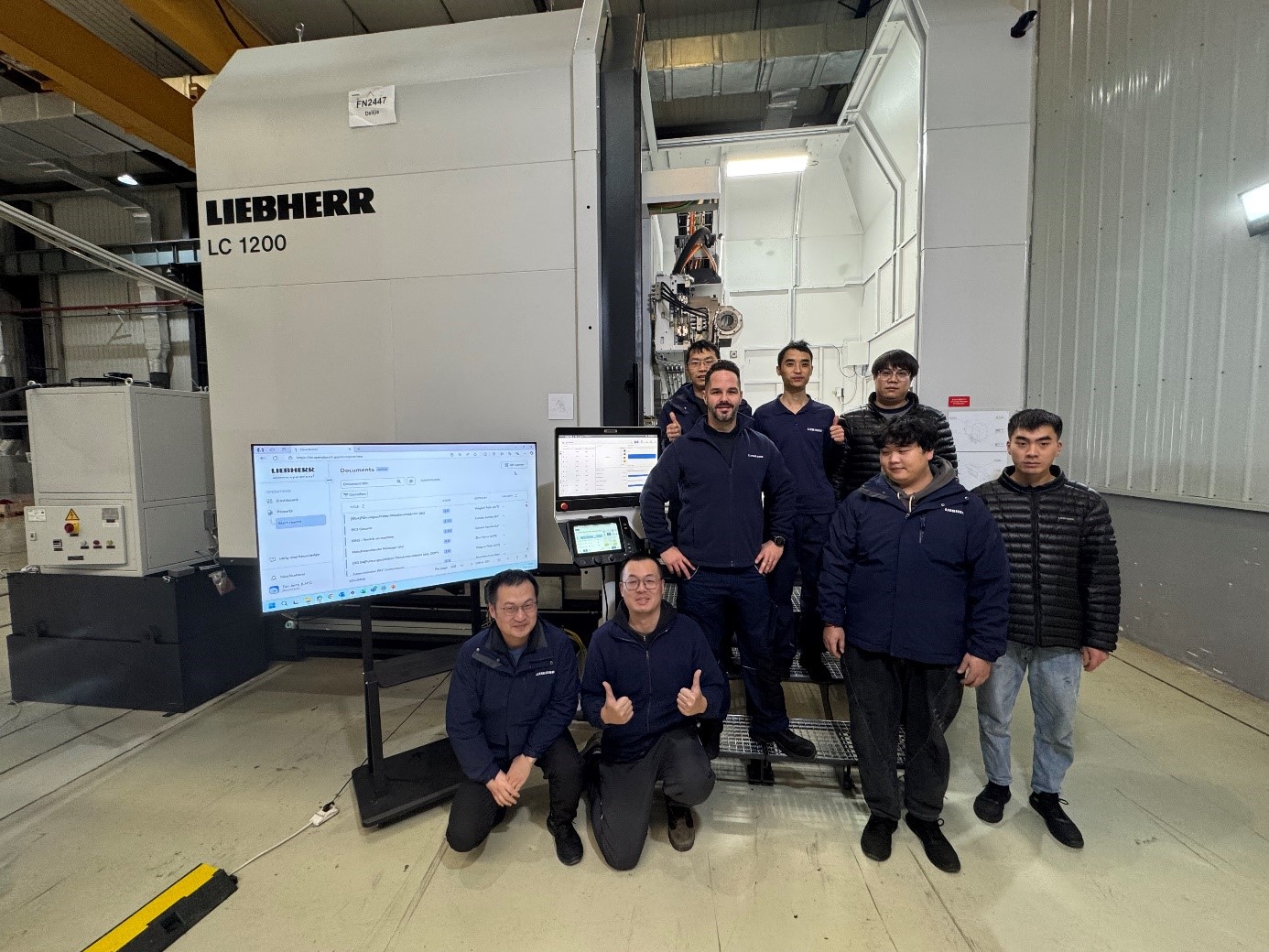
After an introduction to the software that took only a few minutes, the Chinese colleagues worked with the assembly instructions in their own language. They carried out the assembly steps on their own, to the defined process quality, and documented them directly in Operations1. This proved that specialist knowledge from Kempten can be transferred to an international site without any loss of quality.
The Results
66% less time for line relocations: Relocating a product line now takes one year instead of up to three, thanks to systematic documentation and intuitive knowledge transfer.
50% shorter training time in the pilot project: Thanks to instructions in Chinese, the Chinese assembly colleagues trained in Germany were able to work on their own while they were still being trained.
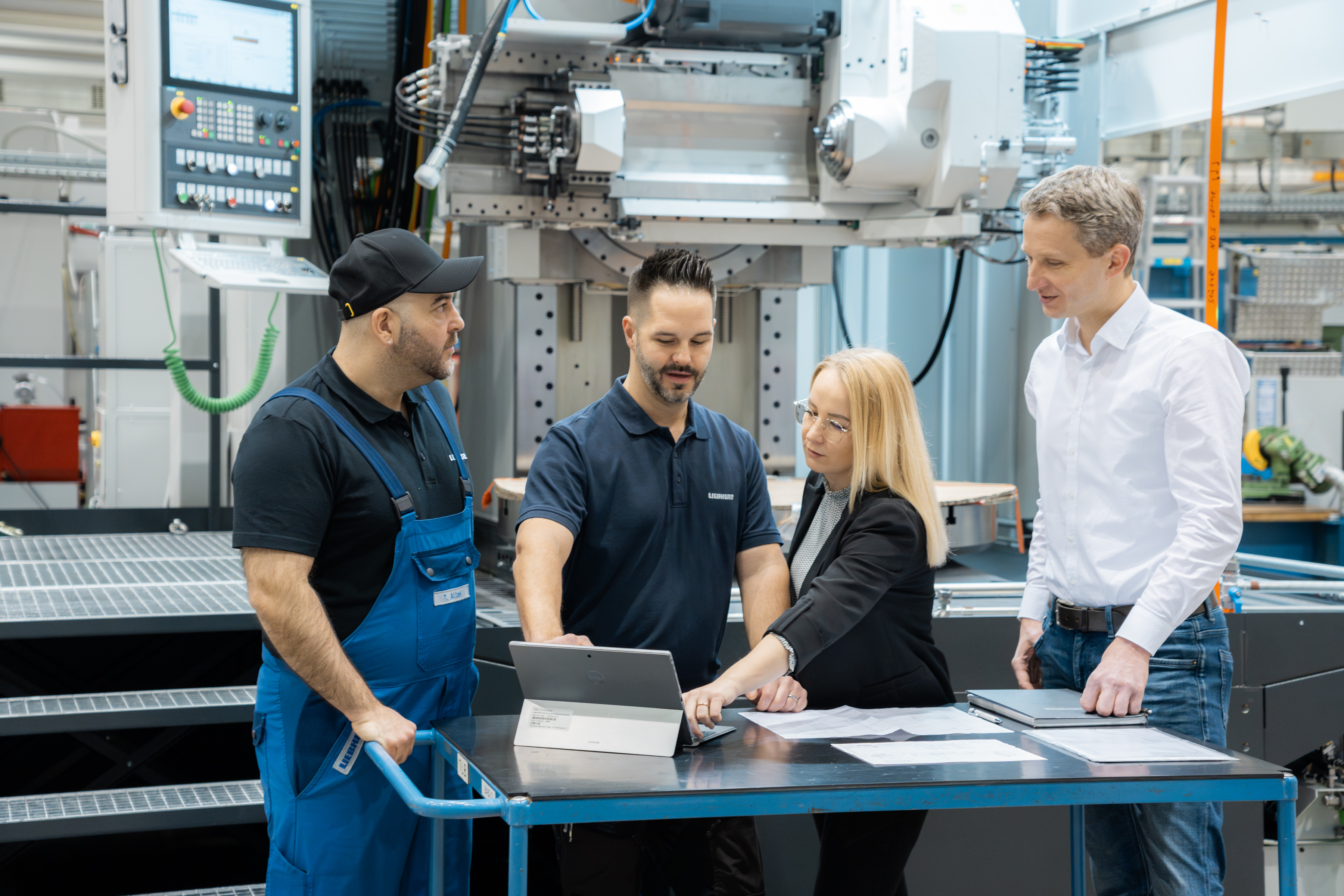
1 trainer for 5 temporary workers at the same time: Step-by-step instructions help new employees work more independently, so the trainer can also help assemble a large machine.
"Better documentation saves us up to 70% of the effort in training. One team leader can now supervise five temporary workers at the same time. For us, Operations1 is an important building block in tackling the skills shortage," says Thomas Unmuth.
Acceptance on the shopfloor is high: new users can work with the software within a few minutes, and feedback from the workforce is positive. Because the assembly steps are logged, complete documentation is also available in real time. Liebherr-Verzahntechnik also spends less effort on document management and benefits from central assembly knowledge that is available to all international sites in the languages they need.
"With Operations1, we can standardize our processes regardless of location. That's a major driver of our efficiency and quality," says Martina Waldmann.
The pilot has long since grown into more. Operations1 is now an integral part of the company's assembly and inspection processes. It is used in several areas to train in-house staff and temporary workers, at national and international subsidiaries as well as at external assembly companies. This allows the company to respond more flexibly to external influences.
Outlook
Liebherr-Verzahntechnik is gradually rolling out the documentation to more modules and machine types. Operations1 is also being introduced in the automation technology division, and a pilot is planned to connect it to surrounding systems such as the ERP system.
"With Operations1, you save money and gain efficiency. We're not just talking about 'going digital for the sake of it.' It's really moving us forward in production," says Thomas Unmuth in summary.
About Liebherr-Verzahntechnik
Liebherr-Verzahntechnik GmbH is one of 13 product segments of the family-run Liebherr Group, which was founded in 1969. The company offers a wide range of machine tools and automation solutions for the industrial production of gears. Its products are used mainly in the automotive and commercial vehicle industries, in machinery and plant engineering and in wind energy.
Liebherr-Verzahntechnik employs more than 1,700 people at six production sites worldwide. Its headquarters and production are located in Kempten (Allgäu), Germany, with other production sites in countries including the USA, Brazil, India and China. Its production is defined by complex large machines built in individual variants, some of which undergo final assembly at international sites and at external assembly partners.